

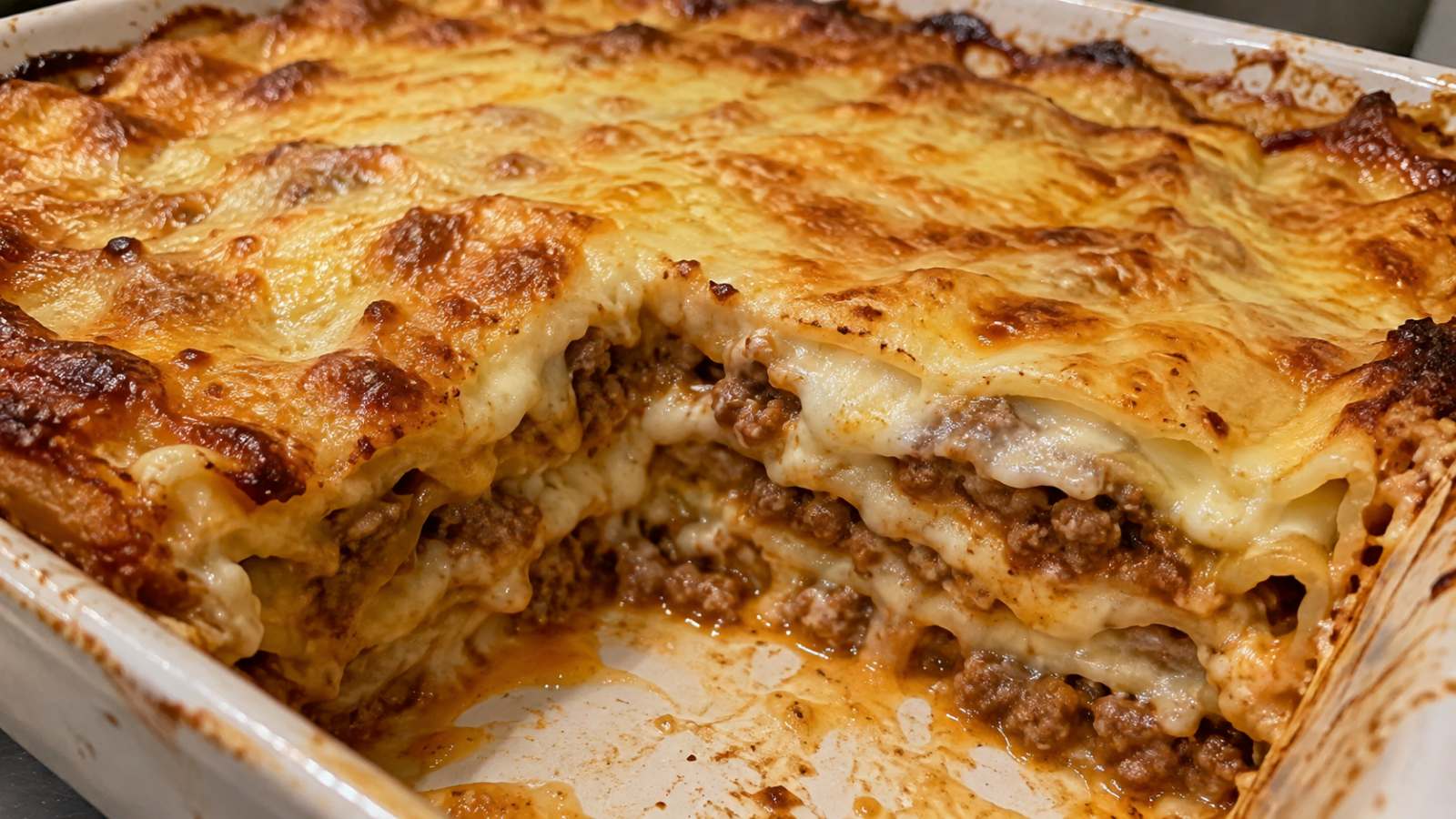
Béchamel, the creamy white sauce made from butter, flour and milk, is a traditional part of Italian-style lasagne. You’ll find that smooth, creamy layer throughout Delia Smith White Sauce Lasagne Recipe, alongside rich beef sauce, tender pasta and golden melted cheese.
Ingredients
This recipe serves 6 people and takes approximately 30 minutes to prepare, 1 hour to simmer the meat sauce and 40–45 minutes to bake.
For the Meat Sauce
500g lean minced beef
1 large onion, finely chopped
2 garlic cloves, crushed
1 medium carrot, finely diced
1 celery stick, finely chopped
1 tablespoon olive oil
400g canned chopped tomatoes
2 tablespoons tomato purée
150ml red wine (optional)
200ml beef stock
1 teaspoon dried oregano
1 bay leaf
Salt and freshly ground black pepper
For the White Sauce
60g butter
60g plain flour
750ml whole milk
½ teaspoon freshly grated nutmeg
50g Parmesan cheese, grated
Salt and white pepper to taste
For Assembling
250g dried lasagne sheets
150g mozzarella cheese, grated
30g Parmesan cheese, grated
A little butter for greasing the baking dish
How to Make Delia Smith White Sauce Lasagne
Step 1: Cook the Meat Sauce
Pour the olive oil into a large saucepan and heat over medium heat. Add the onion, carrot and celery, then cook for about 8 minutes, stirring occasionally. The vegetables should become soft without turning brown.
Add the crushed garlic and cook for another minute. Increase the heat slightly, add the minced beef and break it into small pieces with a wooden spoon. Continue cooking until the beef loses its pink colour and begins to brown, usually around 6–8 minutes.
Pour in the red wine, if using, and let it bubble for 2–3 minutes. Stir in the chopped tomatoes, tomato purée, beef stock, oregano and bay leaf. Season with salt and black pepper.
Reduce the heat and leave the sauce to simmer gently for 45–60 minutes, with the lid slightly open. Stir occasionally, adding a little water if it becomes too dry.
The finished meat sauce should be thick but still have enough moisture to help cook the pasta. I prefer letting it simmer for the full hour because the tomatoes become less sharp and the beef develops a richer flavour.
Remove the bay leaf before assembling the lasagne.
Step 2: Prepare the White Sauce
Melt the butter in a medium saucepan over low heat. Add the flour and stir continuously for about 2 minutes until the mixture forms a smooth paste. This mixture is called a roux, and it thickens the milk into a creamy sauce.
Add a small amount of milk and whisk until smooth. Continue pouring in the milk gradually, whisking after each addition. Taking your time here helps prevent lumps.
Once all the milk has been added, increase the heat to medium and stir until the sauce begins to simmer. Cook for approximately 5–8 minutes, stirring frequently, until it thickens enough to coat the back of a spoon.
Add the nutmeg, grated Parmesan, salt and white pepper. Stir until the cheese melts, then remove the saucepan from the heat.
The sauce should be creamy but still easy to pour. If it becomes too thick, stir in a little extra milk. I wouldn’t make the white sauce overly thick because the lasagne sheets need moisture to soften properly in the oven.
Step 3: Assemble and Bake the Lasagne
Preheat the oven to 190°C (170°C fan) or Gas Mark 5. Lightly grease a rectangular baking dish, approximately 30 × 20cm, with butter.
Spread a thin layer of meat sauce across the bottom of the dish. Cover with lasagne sheets, followed by more meat sauce and a layer of white sauce.
Repeat the layers until the ingredients are used, finishing with a generous layer of white sauce. Make sure the pasta sheets are fully covered with sauce, especially around the edges.
Scatter the grated mozzarella and remaining Parmesan evenly over the top.
Cover the dish loosely with foil and bake for 25 minutes. Remove the foil and continue baking for another 15–20 minutes until the cheese turns golden brown and the sauce bubbles around the edges.
Insert a knife into the centre to check that the pasta is tender. If the sheets still feel firm, continue baking for a few more minutes.
Leave the lasagne to rest for about 15 minutes before serving. Cutting it immediately can cause the layers to slide apart, while a short rest helps each portion keep its shape.
What to Serve With Delia Smith White Sauce Lasagne
Because lasagne already contains pasta, meat and a rich cheese sauce, I prefer serving it with something fresh or lightly cooked.
Green Salad: A simple salad with lettuce, cucumber, tomatoes and a light vinaigrette gives a fresh contrast to the creamy sauce.
Garlic Bread: Warm garlic bread with a crisp outside is a classic accompaniment, especially for anyone who enjoys soaking up the extra sauce.
Steamed Vegetables: Green beans, broccoli or asparagus work nicely alongside lasagne. A little butter, lemon juice and black pepper is enough for seasoning.
Roasted Vegetables: Courgettes, peppers and aubergines roasted with olive oil make a good alternative to bread.
For a proper family dinner, I think Delia Smith White Sauce Lasagne Recipe is best served with a fresh green salad and a small piece of garlic bread. The lasagne is filling enough without adding too many side dishes.
Delia Smith White Sauce Lasagne Nutrition Information
The following values are approximate estimates for one serving when the lasagne is divided into six portions. The final amounts depend on the beef, cheese and other ingredients used.
Nutrient | Amount Per Serving |
|---|---|
Calories | 690 kcal |
Protein | 43g |
Carbohydrates | 62g |
Fat | 30g |
Saturated Fat | 15g |
Fibre | 5g |
Sugar | 12g |
Sodium | 850mg |
Using lean minced beef reduces some of the fat, while whole milk and Parmesan give the white sauce its rich flavour. You can use semi-skimmed milk if you prefer a lighter version.
FAQs
Can I make white sauce lasagne the day before?
Yes. Assemble the lasagne, cover it and keep it in the refrigerator for up to 24 hours before baking. You may need a few extra minutes in the oven if baking it straight from the fridge.
Do I need to cook the lasagne sheets before assembling?
Most oven-ready dried lasagne sheets can be used without boiling. Check the packet instructions because some traditional dried sheets require precooking. Keep the sheets completely covered with sauce so they soften evenly.
Why does my lasagne turn out watery?
The meat sauce may contain too much liquid, or the white sauce may be too thin. Simmer the meat sauce until thickened and allow the finished lasagne to rest for 15 minutes before cutting.
Can I freeze leftover lasagne?
Yes. Allow the cooked lasagne to cool, then refrigerate promptly and transfer portions into airtight freezer-safe containers. Freeze for up to 3 months for best quality. Thaw overnight in the fridge and reheat until piping hot throughout.
How do I make the white sauce smoother?
Add the milk gradually while whisking continuously. If small lumps appear, whisk firmly over low heat until they disappear. You can also pass the finished sauce through a fine sieve if necessary.
How long should lasagne rest after baking?
Allow approximately 15 minutes. The layers settle as the lasagne cools slightly, making it easier to cut clean portions without losing the creamy sauce between the pasta sheets.