

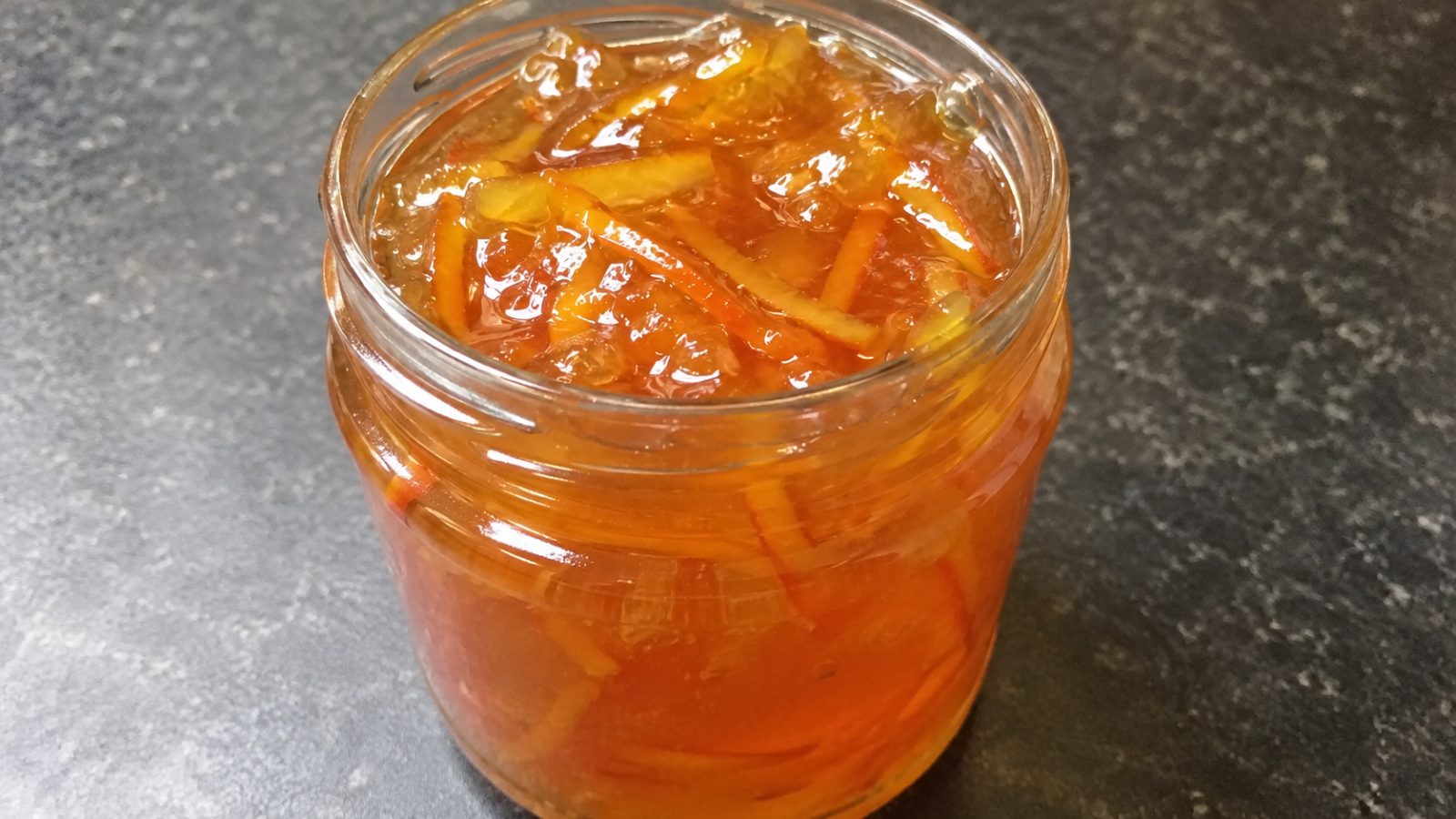
Orange marmalade has a rich amber colour, soft strips of orange peel, and a slightly bitter taste. You can get that classic finish with Delia Smith Marmalade Recipe, using Seville oranges, lemon, sugar, and water.
Ingredients
This recipe makes approximately 6 medium jars of homemade marmalade.
900g Seville oranges
1 large lemon
1.8kg granulated sugar
2.25 litres water
A small amount of butter (optional, for removing foam)
Equipment Needed:
Large preserving pan or heavy-bottomed saucepan
Sharp kitchen knife
Muslin cloth
Kitchen string
Wooden spoon
Preserving thermometer (optional)
Small plates for testing
Clean, sterilised glass jars with lids
Seville oranges are the traditional choice for British marmalade because they have a sharp flavour and plenty of natural pectin. Their bitterness gives the finished preserve its familiar taste, while the sugar balances the acidity.
I recommend using granulated sugar instead of special jam sugar. Seville oranges already contain enough natural pectin for a good set when prepared correctly.
How to Make Delia Smith Marmalade
Step 1: Prepare the Oranges and Lemon
Wash the Seville oranges and lemon thoroughly. Cut the fruit in half and squeeze the juice into a large preserving pan containing 2.25 litres of cold water.
Remove the pips and any loose membranes, keeping them separately. Place these inside a piece of muslin cloth and tie it securely with kitchen string. The pips and membranes contain natural pectin, which helps the marmalade thicken during cooking.
Next, cut the orange peel into thin strips. You can leave the peel slightly thicker if you prefer chunky marmalade, but thin strips usually produce a softer texture.
Add the shredded peel to the pan along with the muslin bag. Make sure all the peel sits beneath the liquid.
For the first time making Delia Smith Marmalade Recipe, I recommend cutting the peel as evenly as possible. Uneven pieces can leave some strips soft while others remain chewy.
Step 2: Simmer the Orange Peel
Place the preserving pan over medium heat and bring the mixture to a gentle boil. Reduce the heat and let it simmer uncovered for approximately 2 hours.
During this stage, the orange peel softens and releases its natural flavour into the water. The liquid will gradually reduce, leaving a stronger citrus mixture.
Stir occasionally, especially as the liquid begins to evaporate.
After about 90 minutes, remove a small piece of orange peel and check its texture. It should feel soft when pressed between your fingers after cooling slightly. If it still feels tough, continue simmering.
Once the peel has softened completely, remove the muslin bag and allow it to cool enough to handle. Squeeze the bag firmly over the pan to extract as much of the thick, pectin-rich liquid as possible.
Don’t rush this part. Adding sugar before the peel becomes tender can prevent it from softening properly.
Step 3: Add Sugar and Cook Until Set
Add the granulated sugar to the pan and stir over low heat until every crystal has dissolved. This usually takes around 10 minutes, depending on the heat and size of the pan.
Increase the heat and bring the mixture to a strong rolling boil. Let it boil for approximately 15–20 minutes, stirring occasionally and watching for excessive bubbling.
To check the setting point, place a small spoonful of marmalade onto a cold plate. Leave it for about a minute, then gently push the surface with your finger.
If the surface wrinkles, the marmalade is ready. If it remains liquid, continue boiling for another 3–5 minutes before testing again.
A preserving thermometer should show approximately 105°C at sea level, although I prefer confirming the result with the cold-plate test.
Remove the pan from the heat and leave the marmalade to stand for 15–20 minutes. This helps the orange peel remain evenly distributed instead of floating to the surface.
Skim off any foam, then carefully pour the marmalade into warm, sterilised jars. Fit clean lids and follow a tested preserving procedure if you intend to store the jars unopened at room temperature.
What to Serve With Delia Smith Marmalade
Buttered Toast: Thick slices of toasted bread with butter are probably the most traditional way to enjoy orange marmalade. The butter softens the bitter citrus taste, while the warm bread makes the preserve easier to spread.
English Muffins: Toasted English muffins have a slightly chewy texture that goes nicely with the soft orange peel. Add a little butter before spreading the marmalade for a proper British-style breakfast.
Croissants: A warm croissant with a spoonful of marmalade makes a simple breakfast. The rich pastry contrasts nicely with the sharp orange flavour.
Scones: Plain scones, clotted cream, and homemade marmalade make a good afternoon tea combination. Personally, I prefer marmalade with plain scones because sweeter varieties can overpower the orange flavour.
Roast Ham: Marmalade also makes a useful glaze for roast ham. Mix a few tablespoons with mustard and brush it over the meat during the final part of roasting.
Delia Smith Marmalade Nutrition Information
The following nutritional values are approximate for one tablespoon (20g) of marmalade.
Nutrient | Amount |
|---|---|
Calories | 55 kcal |
Carbohydrates | 14g |
Sugar | 13g |
Protein | 0g |
Fat | 0g |
Fibre | 0.2g |
Sodium | 1mg |
Traditional marmalade contains a considerable amount of sugar because sugar helps preserve the fruit and contributes to the finished texture.
The exact nutritional values depend on the final quantity produced and how much water evaporates during cooking.
FAQs
Can I use ordinary oranges instead of Seville oranges?
Yes, but the flavour will be different. Ordinary oranges are sweeter and contain less of the bitterness associated with traditional marmalade. They may also need additional pectin to achieve a firm set.
Why is my marmalade still runny?
The most common reason is that the mixture hasn’t reached its setting point. Return it to the pan and boil for a few more minutes before repeating the cold-plate test. Remember that marmalade becomes firmer as it cools.
Why has my marmalade turned dark?
A darker colour usually comes from prolonged boiling or cooking over excessive heat. Seville orange marmalade should have a golden to deep amber colour. If the mixture begins smelling burnt, the heat is too high.
Can I reduce the amount of sugar?
Reducing the sugar can affect both the setting texture and preservation. For a lower-sugar marmalade, use a tested recipe designed for reduced sugar rather than changing the quantity in this traditional version.
How long does homemade marmalade last?
Properly processed and sealed marmalade generally keeps its best quality for up to 12 months in a cool, dark cupboard. Jars that haven’t been processed using a tested shelf-stable preserving method should be refrigerated. Always refrigerate after opening.
Can I make marmalade without muslin cloth?
Yes. You can place the pips and membranes in a suitable reusable food-safe straining bag. The purpose is to extract natural pectin while keeping the unwanted pieces out of the finished marmalade.