

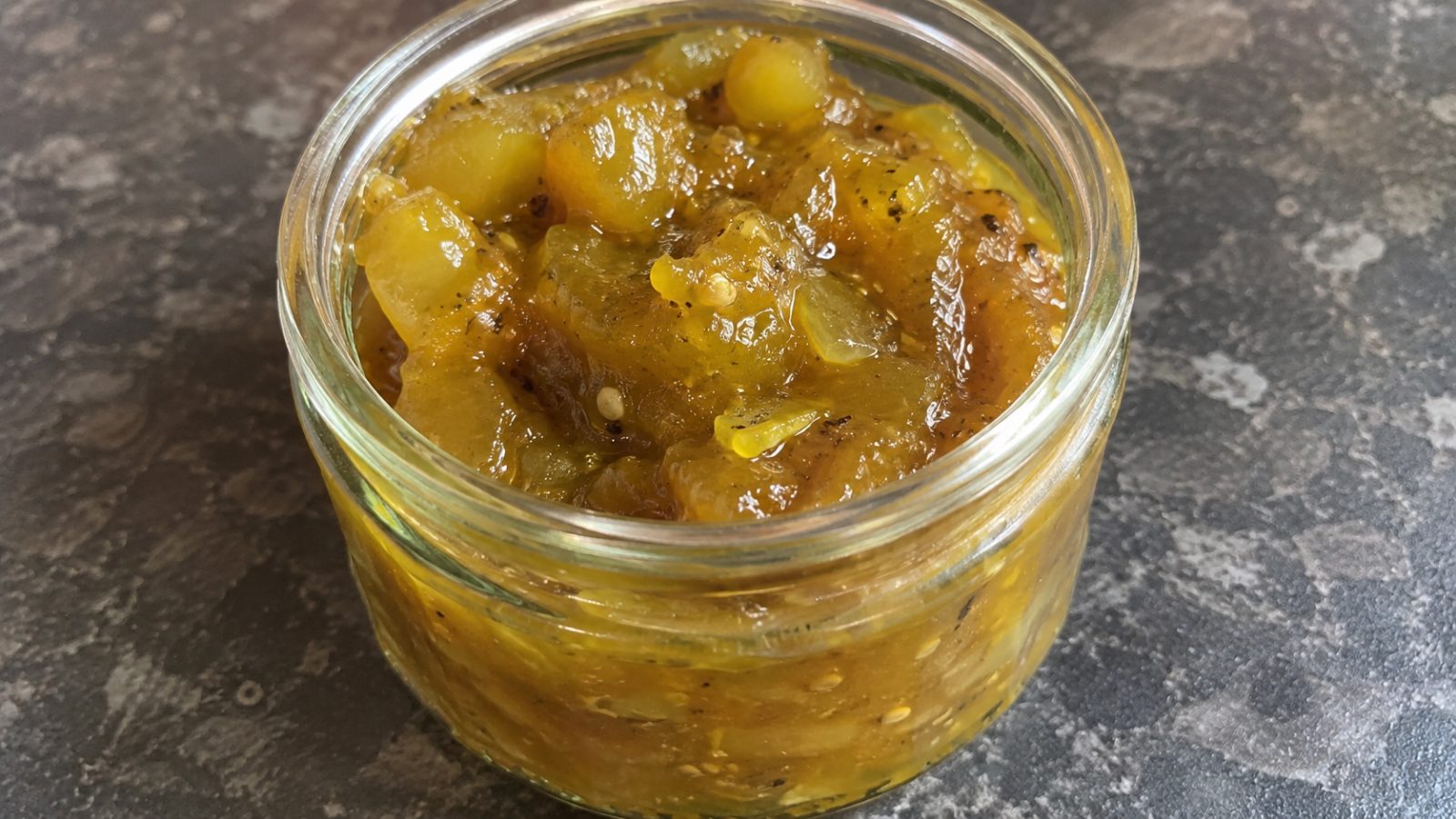
Green tomato chutney gets its sharp, sweet flavour from slow cooking with vinegar, sugar and spices. With apples and onions adding extra richness, Delia Smith Green Tomato Chutney Recipe turns firm, unripe tomatoes into a thick, tangy preserve that tastes especially good with cheese and cold meats.
Ingredients
This recipe makes approximately 6–7 small jars, depending on how much the chutney reduces during cooking.
1 kg green tomatoes – Washed and roughly chopped.
350 g cooking apples – Peeled, cored and diced.
300 g onions – Peeled and finely chopped.
200 g raisins – For natural sweetness and texture.
350 g soft brown sugar – Gives the chutney a rich colour and sweetness.
500 ml malt vinegar – Use vinegar containing at least 5% acidity.
20 g fresh ginger – Peeled and finely grated.
2 teaspoons mustard seeds – For a gentle, peppery taste.
1 teaspoon ground allspice – Adds a warm, slightly sweet flavour.
½ teaspoon ground cloves – For a stronger, aromatic spice flavour.
1 teaspoon salt – To balance the sugar and vinegar.
Preparation Time: 25 minutes Cooking Time: 1½–2 hours Servings: Approximately 6–7 small jars
How to Make Delia Smith Green Tomato Chutney
Step 1: Prepare the Tomatoes, Apples and Onions
Start by washing the green tomatoes thoroughly. Remove the stalks and cut away any damaged sections. Chop the tomatoes into small pieces, keeping them reasonably even so they cook at the same speed. There is no need to peel them because the skins soften during cooking.
Next, peel and finely chop the onions. Peel the cooking apples, remove their cores and cut them into small cubes. Bramley apples are a good choice because they soften easily and have a pleasantly sharp flavour.
Place the chopped tomatoes, apples and onions into a large stainless steel or enamelled preserving pan. Pour in the malt vinegar and stir everything together.
Put the pan over medium heat and bring the mixture to a gentle simmer. Cook uncovered for around 20–25 minutes, stirring occasionally, until the vegetables begin to soften.
The tomatoes will release plenty of liquid at first, which is normal. Keep the heat moderate and give the mixture enough time to cook without boiling too fiercely.
Step 2: Add the Sugar, Raisins and Spices
Add the soft brown sugar, raisins, grated ginger, mustard seeds, ground allspice, cloves and salt to the softened vegetables.
Stir everything over low heat until the sugar has dissolved completely. Take a little time here because undissolved sugar can catch on the bottom of the pan as the chutney thickens.
Once the sugar has dissolved, increase the heat slightly and bring the mixture back to a gentle simmer.
Continue cooking uncovered for approximately 60–90 minutes, stirring frequently. The liquid will gradually reduce, while the tomatoes and apples soften into a thick mixture.
As the chutney becomes darker and thicker, stir more often to prevent it from sticking.
I prefer a slow simmer for chutney because it gives the vegetables enough time to soften without burning the sugar. A high heat may reduce the liquid more quickly, but it also increases the chance of scorching.
Step 3: Check the Thickness and Fill the Jars
After about 90 minutes of total cooking, check the consistency. The chutney should look thick, glossy and slightly chunky, without a layer of watery liquid sitting on top.
Draw a wooden spoon across the bottom of the pan. If it leaves a clear trail that closes slowly, the chutney is nearly ready. If the mixture runs straight back together, continue simmering for another 10–15 minutes.
Taste a small amount after letting it cool. The flavour should be sweet and tangy, with gentle warmth from the spices.
Carefully spoon the hot chutney into clean, heatproof jars and seal them with suitable lids.
Allow the jars to cool before refrigerating. This recipe is intended for refrigerator storage, not shelf-stable preserving. Simply sealing hot chutney in jars does not make it safe for storage at room temperature.
For a better flavour, leave the chutney in the refrigerator for at least two days before serving. Keep refrigerated and use within three weeks.
What to Serve With Delia Smith Green Tomato Chutney
Green tomato chutney is traditionally served with cheese, cold meats and savoury British dishes. Its sweetness softens salty flavours, while the vinegar helps cut through richer foods.
Mature Cheddar cheese: Strong Cheddar tastes particularly good with sweet, tangy chutney.
Pork pies: The chutney adds a little acidity to the rich pork filling.
Cold roast beef: Serve a spoonful alongside thinly sliced beef.
Cheese sandwiches: Spread chutney onto bread before adding Cheddar or Red Leicester.
Ploughman’s lunch: Enjoy it with crusty bread, cheese, salad and pickles.
Roast pork: The apple and vinegar flavours go particularly well with pork.
My favourite way to serve Delia Smith Green Tomato Chutney Recipe is with mature Cheddar and thick slices of fresh bread. You get the sharp cheese, sweet chutney and soft bread together without needing anything complicated.
Delia Smith Green Tomato Chutney Nutrition Information
These nutritional values are approximate estimates for a 20 g serving. The actual amounts depend on the ingredients and the final quantity of chutney.
Nutrient | Amount per 20 g |
|---|---|
Calories | 30 kcal |
Carbohydrates | 7 g |
Sugar | 6 g |
Protein | 0.2 g |
Fat | 0.1 g |
Fibre | 0.3 g |
Sodium | 35 mg |
Although the chutney contains tomatoes, apples and onions, it also contains a generous amount of sugar. It is best enjoyed in small portions as a condiment alongside other foods.
FAQs
Can I use completely green tomatoes for chutney?
Yes. Firm, mature green tomatoes are suitable for traditional chutney. Choose healthy tomatoes without mould or damaged areas. Remove the stalks and wash the tomatoes thoroughly before chopping.
Can I use white vinegar instead of malt vinegar?
Yes. White wine vinegar or distilled white vinegar with at least 5% acidity can replace malt vinegar. Malt vinegar gives a stronger, traditional flavour, while white wine vinegar produces a slightly lighter taste.
Why is my green tomato chutney too watery?
Green tomatoes naturally contain plenty of water. If your chutney is watery, it probably needs more cooking time. Continue simmering uncovered and stir regularly until the extra liquid evaporates.
Can I make green tomato chutney without raisins?
Yes. You can leave out the raisins if you prefer a less fruity chutney. Currants or finely chopped dates are also suitable alternatives.
How long does homemade green tomato chutney last?
This version should be kept refrigerated and used within three weeks. You can also freeze portions for longer storage. For pantry storage, use a tested canning recipe with the correct processing instructions.
Why should green tomato chutney rest before eating?
Freshly cooked chutney often has a strong vinegar taste. After a couple of days, the sweetness, acidity and spices blend more evenly. The flavour becomes smoother, which is why I recommend preparing it at least 48 hours before serving.