

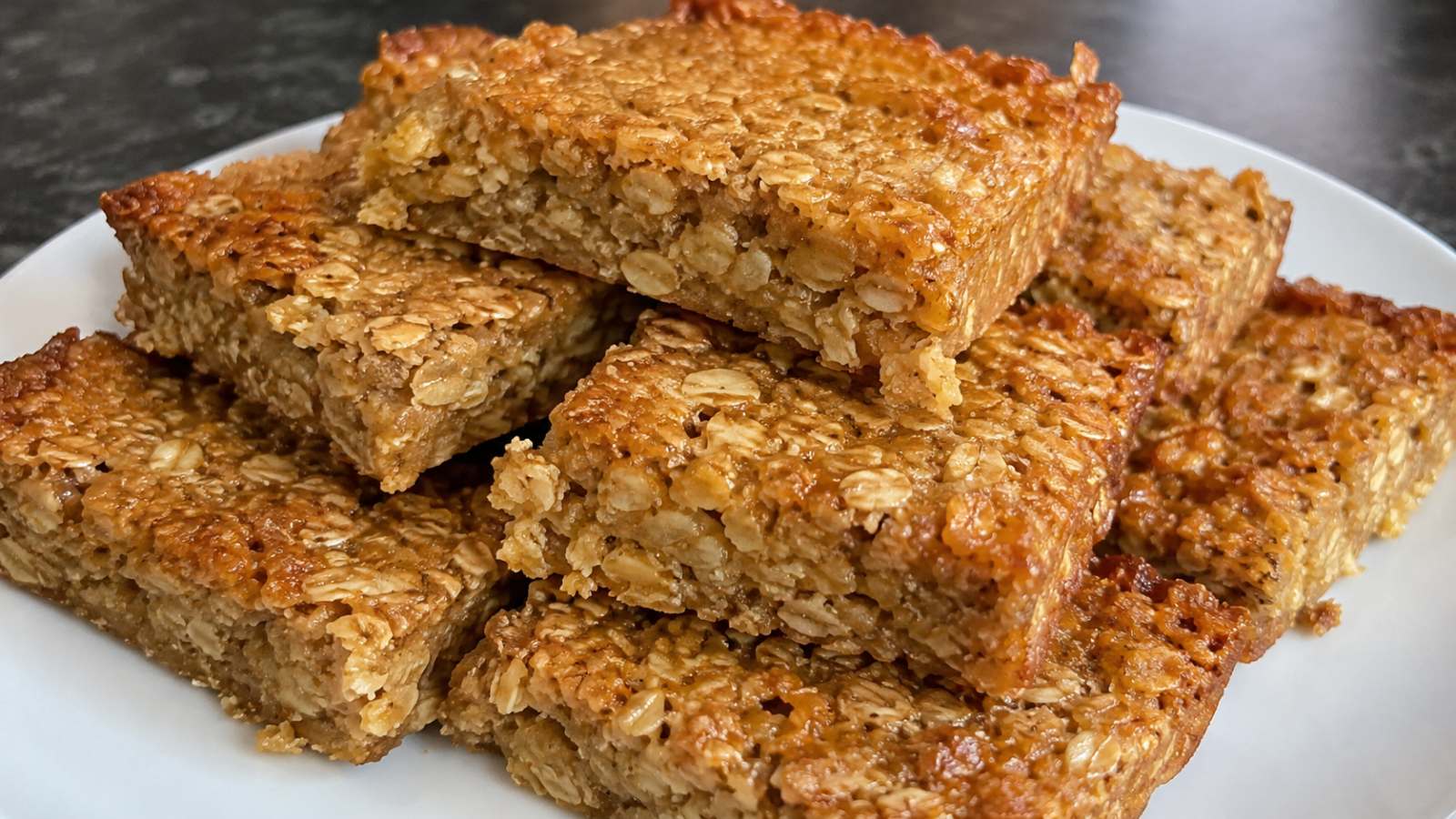
Flapjacks are chewy oat bars made from butter, brown sugar, golden syrup and porridge oats. With their rich caramel flavour and golden edges, Delia Smith Flapjacks Recipe keeps this old-fashioned bake simple and satisfying.
Ingredients
You only need four main ingredients to make these classic flapjacks. Regular porridge oats give them their familiar chewy texture, while the butter and golden syrup help everything stick together.
350g porridge oats: Regular rolled porridge oats give the flapjacks a firm but chewy texture.
225g unsalted butter: Adds a rich buttery flavour and keeps the oat mixture moist.
150g soft brown sugar: Gives the flapjacks their sweetness and slightly caramelised taste.
1 rounded tablespoon golden syrup: Helps hold the oats together and adds a pleasant sticky texture.
Extra butter: For greasing the baking tin.
Optional additions:
50g raisins or sultanas for extra sweetness.
50g chopped walnuts or almonds for a little crunch.
100g melted chocolate for drizzling over the finished flapjacks.
Recipe Details:
Prep Time: 10 minutes
Cook Time: 40–45 minutes
Total Time: 50–55 minutes, plus cooling
Servings: 16 flapjacks
Oven Temperature: 150°C (130°C fan), Gas Mark 2
How to Make Delia Smith Flapjacks
Step 1: Prepare the Tin and Melt the Butter
Preheat your oven to 150°C (130°C fan), Gas Mark 2. Grease a 20cm square baking tin with a little butter, then line the base and sides with baking parchment. Leave enough parchment hanging over the edges to lift the flapjacks out easily after cooling.
Place the butter, brown sugar and golden syrup in a medium saucepan. Set it over low heat and stir gently until the butter has completely melted and the sugar has mostly dissolved.
Keep the heat low throughout this stage. You want a smooth, buttery syrup rather than a bubbling caramel. If the mixture becomes too hot, the sugar can start to cook too quickly, leaving the flapjacks harder once cooled.
Remove the saucepan from the heat as soon as the ingredients are combined.
Step 2: Add the Oats and Fill the Tin
Pour the porridge oats into the saucepan with the melted butter mixture. Stir everything together using a wooden spoon until the oats are evenly coated.
Take your time with the mixing. Dry patches of oats can make the finished flapjacks crumbly, so scrape the bottom and sides of the saucepan to distribute the syrup properly.
If you’re adding raisins, sultanas or chopped nuts, stir them through the mixture now.
Spoon the oats into your prepared baking tin and spread them evenly into the corners. Press the mixture down firmly with the back of a spoon or a flat spatula.
I prefer pressing the oats into a fairly compact layer because the flapjacks are much easier to cut once cooled. An uneven or loosely packed mixture can break apart when you try to lift it from the tin.
Step 3: Bake Until Golden and Leave to Cool
Place the tin on the middle shelf of your preheated oven and bake for 40–45 minutes, until the edges turn golden brown and the centre looks set but remains slightly soft.
Avoid baking until the centre feels completely firm. Flapjacks continue to harden as they cool, and leaving them in the oven too long can make them dry and difficult to bite.
Remove the tin from the oven and leave it to cool for about 10 minutes. While the mixture is still warm, use a sharp knife to mark 16 equal squares.
Allow the flapjacks to cool completely in the tin before lifting them out and cutting along the marked lines.
You should end up with golden oat bars that hold their shape, with slightly crisp edges and a chewy middle.
What to Serve With Delia Smith Flapjacks
Flapjacks are traditionally eaten as a snack, usually with tea or coffee. Their buttery sweetness goes particularly well with a strong cup of English breakfast tea, although they’re equally enjoyable with cold milk.
For breakfast or an afternoon snack, serve a small flapjack with plain Greek yoghurt and fresh berries. Strawberries, raspberries and blueberries provide a pleasant contrast to the sweet oats.
I think Delia Smith Flapjacks Recipe tastes nicest at room temperature, when the edges have firmed up but the middle still has some chewiness. There’s no need for extra toppings if you enjoy the traditional version.
Delia Smith Flapjacks Nutrition Information
The following nutritional values are approximate estimates for one flapjack when the mixture is divided into 16 equal squares. They exclude optional chocolate, nuts and dried fruit.
Nutrient | Amount Per Serving |
|---|---|
Calories | 230 kcal |
Carbohydrates | 25g |
Protein | 3g |
Total Fat | 13g |
Saturated Fat | 7g |
Sugar | 11g |
Fibre | 2g |
Sodium | 10mg |
Oats provide fibre and some protein, while butter contributes most of the fat. Brown sugar and golden syrup provide the sweetness.
Flapjacks are quite rich for their size, so smaller squares are a good choice if you’re serving them alongside other snacks or desserts.
FAQs
Why are my flapjacks falling apart?
Flapjacks can fall apart if the oats weren’t coated thoroughly with the melted butter mixture or weren’t pressed firmly into the baking tin. Cutting them before they’ve cooled completely can also cause crumbling. Leave them in the tin until cold and use regular porridge oats for a more compact texture.
How do I make flapjacks soft and chewy?
The easiest way to keep flapjacks chewy is to avoid overbaking them. Remove the tin when the edges are golden but the centre still feels slightly soft. A generous amount of butter also helps maintain a moist texture. For an even softer result, you can increase the butter slightly, although the bars may become more delicate.
Can I replace golden syrup with honey?
Yes, honey can replace golden syrup in the same quantity. The flapjacks will have a slightly different flavour, depending on the honey you use. Golden syrup gives traditional British flapjacks their familiar caramel sweetness, so I would keep it if you want the classic taste.
How long do homemade flapjacks stay fresh?
Homemade flapjacks generally keep well for 5–7 days in an airtight container at room temperature. Allow them to cool completely before storing, and keep the container in a cool, dry place. Place baking parchment between layers if the flapjacks are slightly sticky.
Can you freeze flapjacks?
Yes, flapjacks freeze well for up to three months. Wrap individual squares and place them in a freezer-safe airtight container. When you’re ready to eat them, remove the required number and leave them to thaw at room temperature.
Why have my flapjacks turned out hard?
Hard flapjacks are usually caused by excessive baking or overheating the butter and sugar mixture. Cooking the syrup at a high temperature can make the sugar caramelise too much. Use gentle heat when melting the ingredients and remove the flapjacks from the oven before the centre becomes completely firm.
Can I make flapjacks with jumbo oats?
You can use jumbo oats, but the flapjacks will have a coarser texture and may crumble more easily. Regular porridge oats absorb the buttery syrup more evenly and produce a firmer bar. If you only have jumbo oats, lightly pulse some of them in a food processor before mixing to help the finished flapjacks hold together.