

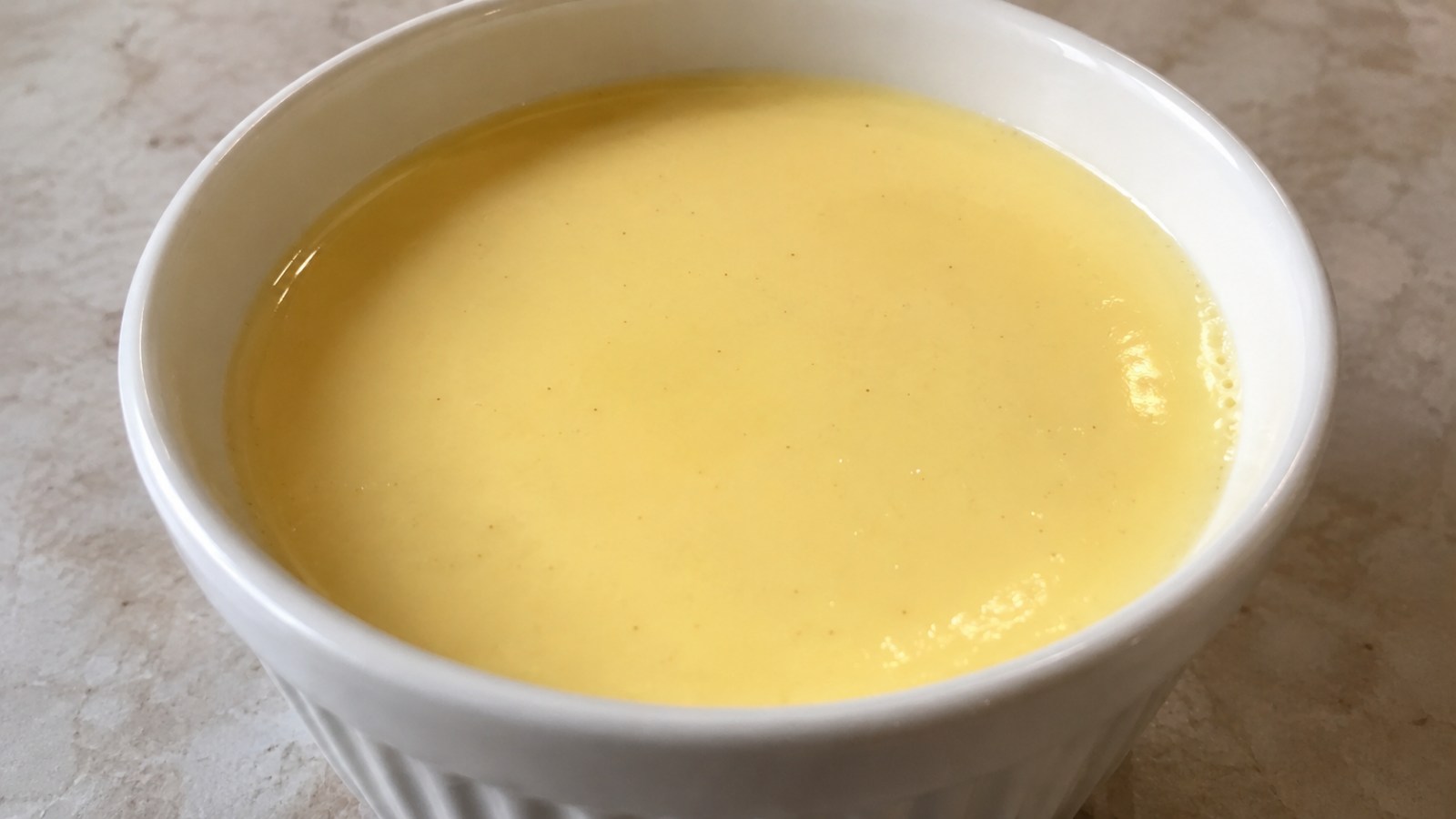
British custard is a smooth vanilla sauce made by gently cooking egg yolks, sugar, and warm milk or cream. For a rich homemade version with a creamy texture, follow Delia Smith Egg Custard Recipe and keep the heat gentle throughout cooking.
Ingredients
Servings: 6
Preparation Time: 10 minutes
Cooking Time: 10–15 minutes
570ml (1 pint) single cream: Gives the custard a rich, creamy consistency. Whole milk makes a lighter version, while double cream produces a much richer sauce.
6 large egg yolks: Give the custard its golden colour and help it thicken during cooking.
50g golden caster sugar: Sweetens the custard without making it overly sugary. Ordinary caster sugar is also suitable.
1 level dessertspoon cornflour: Helps the custard thicken evenly and reduces the chance of curdling.
1 dessertspoon vanilla extract: Adds the familiar vanilla flavour found in traditional British custard.
For this recipe, I prefer single cream. It gives the custard enough richness without making it too thick to pour over a pudding. Double cream is a good choice if you want something heavier, particularly for a cold dessert.
You will also need a saucepan with a heavy base, a mixing bowl, a balloon whisk, and a wooden spoon.
How to Make Delia Smith Egg Custard
Step 1: Warm the Cream
Pour the single cream into a saucepan and place it over low heat. Warm it slowly, stirring occasionally so the cream heats evenly.
Watch for small bubbles beginning to appear around the edges of the saucepan. The cream should be hot and steaming, but it should not reach a rolling boil.
Once heated, remove the saucepan from the stove.
There is no need to rush this part. Very hot cream can cause the egg yolks to cook too quickly when the two mixtures are combined. Keeping the temperature controlled makes the next step easier.
Step 2: Whisk the Egg Yolks and Sugar
Place the six egg yolks in a heatproof mixing bowl. Add the golden caster sugar, cornflour, and vanilla extract.
Whisk everything together until the mixture looks smooth and the cornflour has completely disappeared into the eggs.
Slowly pour a small amount of warm cream into the egg mixture while whisking continuously. Once combined, gradually add the remaining cream, continuing to whisk.
This technique is called tempering. It gently warms the egg yolks before they return to the saucepan, reducing the chance of scrambling.
Make sure the cream is added gradually. Pouring all the hot liquid over the yolks at once can leave you with small pieces of cooked egg instead of a smooth custard.
Step 3: Cook the Custard Until Thickened
Pour the combined mixture back into the saucepan and return it to low heat.
Stir continuously with a wooden spoon or whisk, making sure to reach the bottom and corners of the saucepan.
After several minutes, the custard will begin thickening. Continue stirring until it coats the back of a spoon.
To check, lift the spoon from the saucepan and draw your finger across its back. If the line remains visible without the custard running straight back over it, the sauce has thickened sufficiently.
Remove the custard from the heat once it reaches the right consistency. Avoid vigorous boiling, as excessive heat can make the eggs curdle.
Pour the finished custard into a serving jug and serve warm.
If the custard develops a few lumps, pass it through a fine sieve while it is still warm. This can improve the texture without changing its flavour.
What to Serve With Delia Smith Egg Custard
British custard is traditionally served with warm puddings, particularly desserts containing fruit, pastry, or sponge cake. Its creamy vanilla flavour balances sweet desserts without covering their original taste.
Apple crumble is probably my favourite pairing. The combination of soft cooked apples, crisp crumble topping, and warm custard is a familiar British dessert. For an apple crumble, I prefer the single-cream version of Delia Smith Egg Custard Recipe because it pours easily and does not make the dessert feel too heavy.
Bread and butter pudding is another excellent choice. The soft bread, dried fruit, and lightly browned top taste especially good with a little warm custard poured over each serving.
Steamed sponge pudding also pairs well with custard. Traditional syrup sponge, jam sponge, and spotted dick are commonly served this way.
You can also serve the custard with apple pie, rhubarb crumble, or Christmas pudding. If you prefer something cold, allow it to cool completely before using it as a layer in a homemade trifle.
Delia Smith Egg Custard Nutrition Information
The following nutritional values are approximate for one serving, based on six portions made with single cream.
Nutrient | Amount per serving |
|---|---|
Calories | 275 kcal |
Protein | 5g |
Carbohydrates | 14g |
Fat | 22g |
Sugar | 12g |
Fibre | 0g |
Using whole milk instead of single cream will considerably reduce the calories and fat. Double cream will increase both.
FAQs
Why is my homemade egg custard not thickening?
The custard may need a little more cooking time. Keep it over low heat and continue stirring until it coats the back of a spoon. Avoid turning the heat up sharply, as the eggs can curdle before the mixture thickens properly.
Can I use whole milk instead of cream?
Yes. Whole milk makes a lighter custard with less fat. The flavour will still be pleasant, although the result will not be as rich as custard prepared with cream. You can also combine milk and single cream.
Why has my custard become lumpy?
Lumpy custard usually means the eggs have cooked too quickly. Remove the saucepan from the heat immediately and whisk thoroughly. Small lumps can sometimes be removed with a fine sieve, although badly curdled custard may need to be prepared again.
Can I make egg custard ahead of time?
Yes. Allow the custard to cool promptly, then transfer it to an airtight container and refrigerate within two hours. Use it within two days. Reheat gently in a saucepan over low heat, stirring regularly until hot throughout.
Can I freeze homemade egg custard?
Freezing is not recommended because homemade egg custard can separate after thawing. Its smooth texture may become watery or grainy. Freshly prepared custard gives the most reliable result.
What is the difference between egg custard and ordinary custard powder?
Traditional egg custard uses real egg yolks to provide flavour, colour, and thickening. Custard powder generally relies on cornflour and flavourings instead of eggs. Homemade egg custard usually has a richer taste and a creamier consistency.
Can I eat homemade egg custard cold?
Yes. Refrigerated custard can be served cold with fruit, cakes, or trifle. It becomes thicker as it cools, so give it a gentle stir before serving. If it is too thick, stir in a small amount of cold milk until you reach your preferred consistency.