

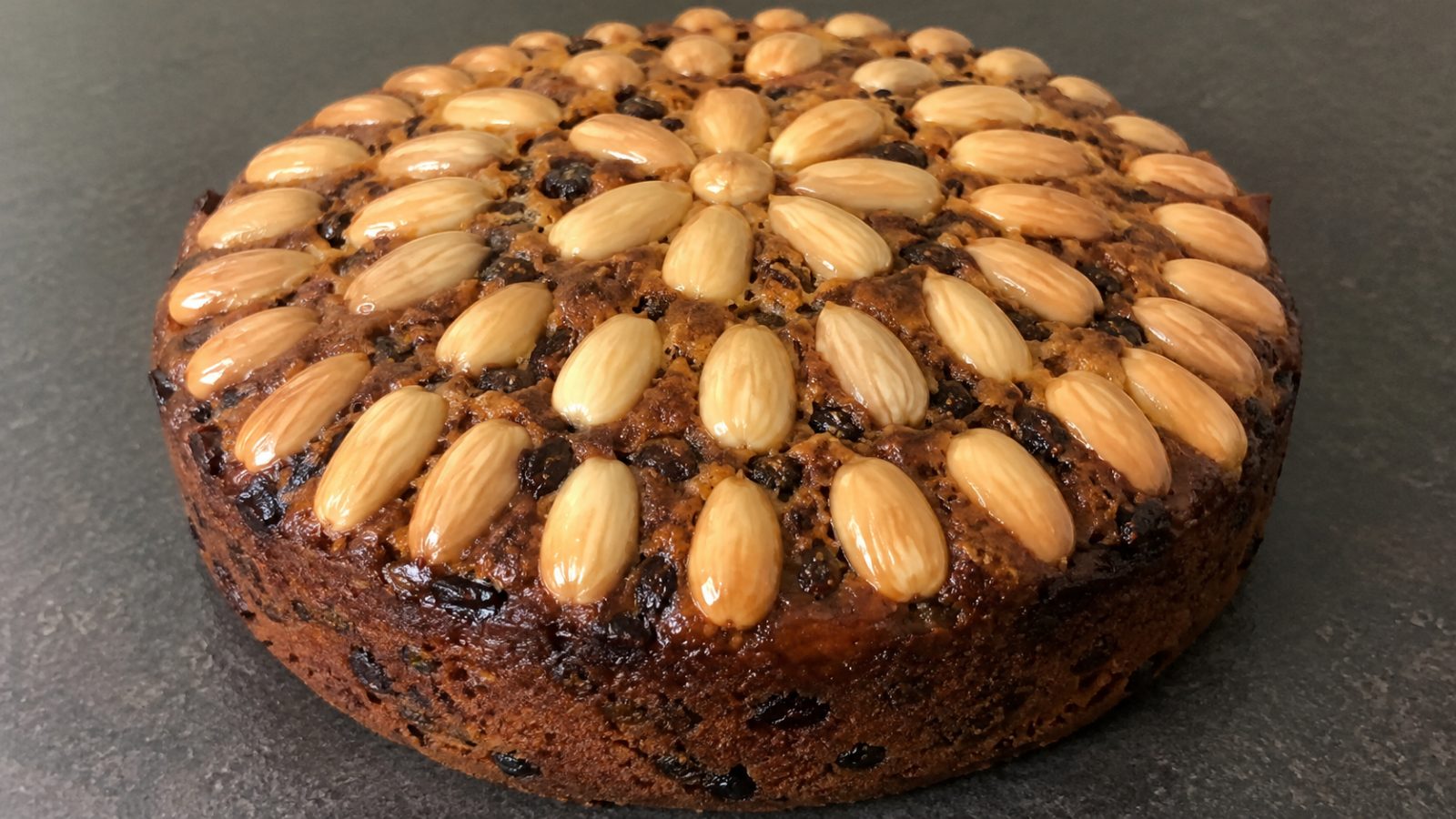
Dundee cake is a traditional Scottish fruit cake famous for its circles of whole almonds and rich citrus flavour. For a homemade version with a soft, fruity centre, follow the classic Delia Smith Dundee Cake Recipe using currants, sultanas, butter, and fresh citrus zest.
Ingredients
This recipe makes one 18–20 cm round cake, serving approximately 12 people.
For the Cake:
225g plain flour
1 teaspoon baking powder
150g unsalted butter, softened
150g caster sugar
3 large eggs
175g currants
175g sultanas
50g glacé cherries, washed and halved
50g mixed candied peel
2 tablespoons ground almonds
Finely grated zest of 1 orange
Finely grated zest of 1 lemon
1 tablespoon milk, if needed
For the Topping:
– 50g whole blanched almonds
Use butter that has softened naturally at room temperature. Cold butter is difficult to cream properly, while melted butter makes the mixture too loose. The dried fruit should also be separated before mixing so it spreads evenly through the cake.
How to Make Delia Smith Dundee Cake
Step 1: Prepare the Cake Batter
Preheat your oven to 170°C (325°F), Gas Mark 3, or 150°C for a fan oven. Grease a deep 18–20 cm round cake tin and line the bottom and sides with baking parchment. Leave the parchment slightly above the rim to protect the edges during the long baking time.
Place the softened butter and caster sugar in a large mixing bowl. Beat them together for about 3–5 minutes until pale, creamy, and lighter in texture. An electric mixer makes this easier, but a wooden spoon works if you beat the mixture thoroughly.
Add the eggs one at a time, mixing after each addition. If the mixture begins to curdle, add a tablespoon of flour before continuing. This is quite common with traditional butter cakes and does not mean the mixture is ruined.
Sift the flour and baking powder into the bowl. Fold them in gently using a large spoon until no dry flour remains. Avoid beating the mixture heavily at this stage, as you want the finished cake to stay tender.
Step 2: Add the Fruit and Almond Topping
Add the currants, sultanas, glacé cherries, mixed candied peel, ground almonds, orange zest, and lemon zest to the batter.
Fold everything together until the dried fruit is spread evenly throughout. The mixture should be thick enough to hold the fruit without letting it sink to the bottom. Add a tablespoon of milk only if the batter seems too stiff to mix comfortably.
Spoon the cake mixture into the prepared tin and spread it evenly with the back of a spoon. Smooth the surface without pressing down too firmly.
Arrange the whole blanched almonds in neat circles, starting near the outer edge and working towards the centre. This almond decoration is what gives Dundee cake its familiar appearance.
I recommend placing the almonds close together without pushing them deeply into the batter. They should remain visible after baking and develop a light golden colour.
Step 3: Bake and Cool the Cake
Place the cake on the middle shelf of the oven and bake for approximately 2–2½ hours. The cooking time can vary depending on your oven and the size of your cake tin.
Check the cake after about 1 hour and 45 minutes. If the surface is browning too quickly, cover it loosely with a piece of baking parchment or foil.
To check if the cake is ready, insert a skewer into the centre. It should come out clean or with a few dry crumbs attached. If wet batter remains on the skewer, continue baking and check again after another 10–15 minutes.
Once baked, remove the cake from the oven and leave it in the tin for around 30 minutes. Carefully lift it out and transfer it to a wire rack to cool completely.
Dundee cake can be eaten once cooled, but I personally prefer leaving it overnight before slicing. The citrus flavour becomes more noticeable, and the fruit settles nicely into the buttery crumb.
What to Serve With Delia Smith Dundee Cake
Dundee cake is traditionally eaten on its own, usually with a cup of tea. Its combination of dried fruit, citrus peel, and almonds gives it enough flavour without requiring icing or a separate sauce.
A strong cup of English breakfast tea pairs particularly well with the cake. Earl Grey is another good choice because its citrus aroma complements the orange and lemon zest.
For something richer, serve a slice with a thin spreading of salted butter. The slight saltiness balances the sweetness of the fruit, especially if the cake has been stored for a day or two.
Freshly brewed coffee also goes well with Dundee cake. I prefer serving thinner slices because the cake contains plenty of fruit and is more filling than a regular sponge cake.
For afternoon tea, the Delia Smith Dundee Cake Recipe is best served at room temperature, allowing the buttery texture and citrus flavours to come through naturally.
Delia Smith Dundee Cake Nutrition Information
The following values are approximate estimates for one slice, assuming the finished cake is divided into 12 equal portions.
Nutrient | Amount per serving |
|---|---|
Calories | 370 kcal |
Carbohydrates | 56g |
Protein | 6g |
Total Fat | 16g |
Saturated Fat | 8g |
Sugar | 37g |
Fibre | 3g |
Sodium | 65mg |
Dundee cake contains a considerable amount of natural sugar from dried fruit, along with added caster sugar. Almonds provide some protein, fibre, and unsaturated fat. Nutritional values will change with different ingredients and slice sizes.
FAQs
What makes Dundee cake different from Christmas cake?
Dundee cake is generally lighter in colour and has a noticeable citrus flavour, with whole blanched almonds arranged on top. Traditional Christmas cake often contains more spices, alcohol-soaked fruit, and sometimes a layer of marzipan and icing.
How long does Dundee cake last?
Homemade Dundee cake generally keeps for one to two weeks when wrapped properly and stored in an airtight container in a cool, dry place. Make sure the cake has cooled completely before wrapping it to prevent moisture from collecting inside.
Can I make Dundee cake without glacé cherries?
Yes. Replace the glacé cherries with an equal amount of currants or sultanas. The cake will still have its traditional fruit-cake texture, although the sweetness and flavour will be slightly different.
Why is my Dundee cake dry?
A dry Dundee cake usually comes from baking it too long or using too much flour. Measure the ingredients carefully and start checking the cake before the suggested baking time ends. Store the cooled cake tightly wrapped to help retain its moisture.
Can Dundee cake be frozen?
Yes. Wrap the completely cooled cake in cling film followed by foil, or use a suitable freezer-safe container. Freeze for up to three months for the best quality. Allow it to thaw completely before unwrapping and serving.
Why are whole almonds used on Dundee cake?
Whole blanched almonds are part of the traditional appearance of Dundee cake. They also provide a gentle crunch that contrasts with the soft fruit-filled crumb. Their circular arrangement makes the cake easy to recognise without any icing or additional decoration.
Is Dundee cake better after a few days?
Yes, Dundee cake often tastes richer after resting for a day or two. The dried fruit holds moisture, and the orange and lemon flavours become more evenly distributed. Store it in an airtight container and cut slices only when needed to keep the remaining cake fresh.