

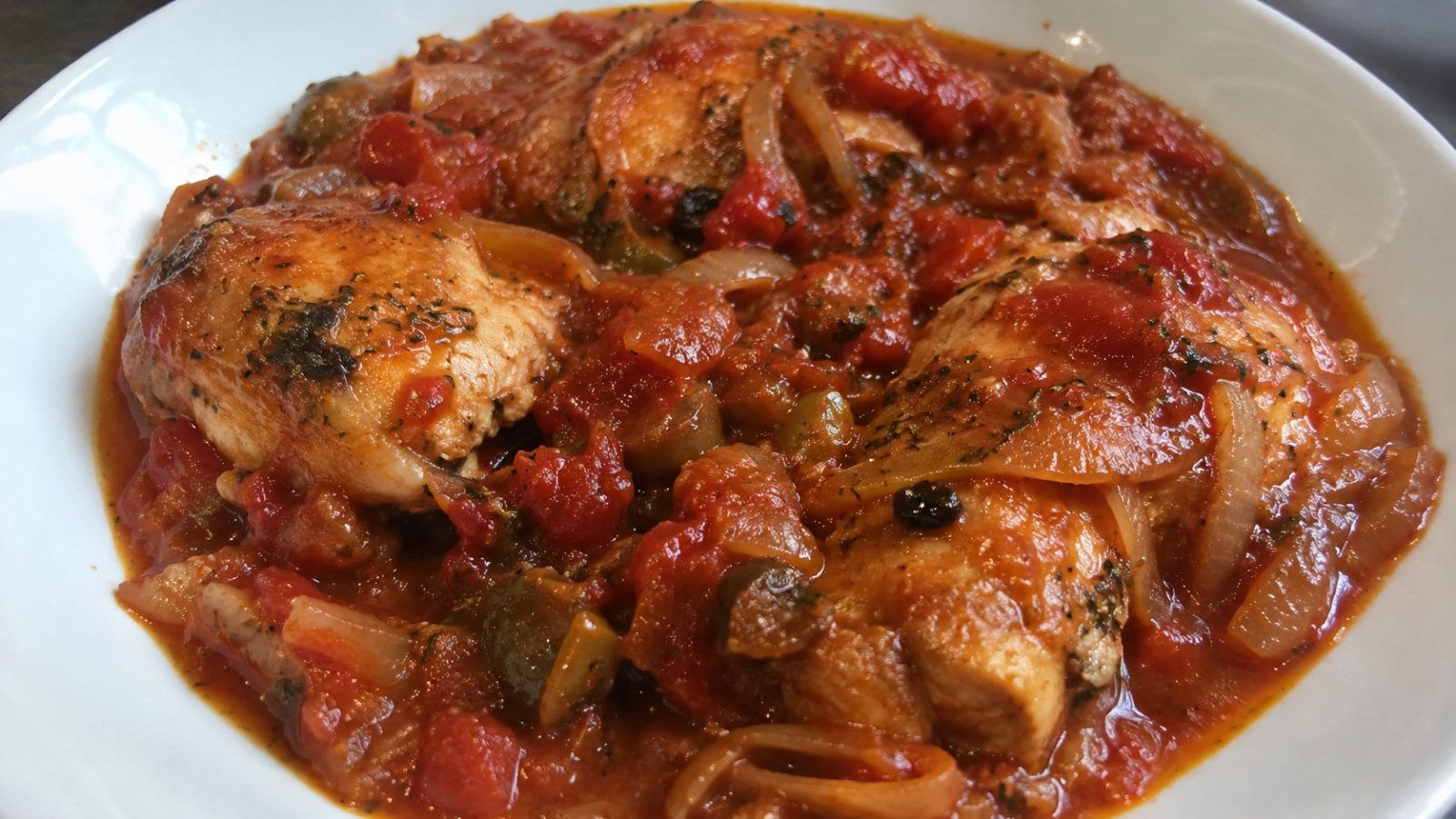
Chicken cacciatore is a traditional Italian hunter-style dish where browned chicken is slowly cooked in a rich tomato and wine sauce. With fresh tomatoes, garlic, and rosemary, Delia Smith Chicken Cacciatore Recipe brings these classic flavours together in a simple, satisfying meal.
Ingredients
This recipe serves 4 people and takes approximately 1 hour and 30 minutes to prepare and cook.
1 whole chicken (approximately 1.35 kg), cut into 8 pieces
1 tablespoon olive oil
2 large onions, peeled and thickly sliced
700 g fresh ripe tomatoes
2 large garlic cloves, crushed
1 tablespoon tomato purée
1 tablespoon fresh rosemary, finely chopped
1 bay leaf
275 ml dry white wine
1 tablespoon white wine vinegar
Salt, to taste
Freshly ground black pepper, to taste
For the best flavour, choose ripe tomatoes and chicken pieces with the bones still attached. Bone-in chicken stays juicy during the long cooking time, while ripe tomatoes give the sauce its natural sweetness.
I prefer using chicken thighs and drumsticks when making this dish because they stay tender even after a lengthy simmer. However, a whole chicken cut into pieces gives you a good mixture of white and dark meat.
How to Make Delia Smith Chicken Cacciatore
Step 1
Start by heating the olive oil in a large, heavy-bottomed casserole dish over medium-high heat. Season the chicken pieces with salt and freshly ground black pepper.
Add the chicken to the hot oil in batches, making sure the pieces have enough space to brown properly. Cook for approximately 4–5 minutes on each side until the skin turns golden.
Remove the chicken from the casserole and transfer it to a plate.
Lower the heat to medium and add the sliced onions to the same casserole. Cook for around 8–10 minutes, stirring occasionally, until they soften and begin turning golden.
While the onions cook, prepare the tomatoes. Place them in a bowl of boiling water for about one minute, then carefully remove the skins and chop the flesh into small pieces.
Step 2
Add the crushed garlic to the softened onions and stir for approximately one minute. The garlic should become fragrant without turning brown.
Add the chopped tomatoes, tomato purée, rosemary, and bay leaf. Stir everything together, then pour in the dry white wine and white wine vinegar.
Season lightly with salt and black pepper.
Increase the heat until the sauce begins to boil, then leave it uncovered for approximately 20 minutes. Stir occasionally to prevent the tomatoes from sticking to the bottom.
The liquid should reduce by roughly half, leaving a thicker sauce with a stronger tomato flavour.
I wouldn’t rush this part of Delia Smith Chicken Cacciatore Recipe because reducing the wine and tomatoes gives the sauce its rich taste. A watery sauce won’t coat the chicken as nicely.
Step 3
Return the browned chicken pieces to the casserole, placing them directly into the tomato sauce.
Spoon some sauce over each piece, cover the casserole with a lid, and reduce the heat to low.
Leave the chicken to simmer gently for approximately 40 minutes, checking occasionally to make sure the sauce isn’t sticking.
During cooking, the chicken absorbs the flavours of the tomatoes, wine, garlic, and rosemary.
Check the thickest part of the chicken with a meat thermometer. It should reach at least 74°C (165°F) before serving.
Remove the bay leaf and taste the sauce. Add more salt or pepper if needed.
Let the dish rest for five minutes before serving so the chicken and sauce settle slightly.
What to Serve With Delia Smith Chicken Cacciatore
Chicken cacciatore has a rich tomato sauce, so I recommend serving it with something simple that absorbs the cooking juices.
Tagliatelle: Fresh or dried tagliatelle goes very well with the thick tomato sauce.
Mashed potatoes: Soft, buttery mashed potatoes are especially good with the tender chicken.
Steamed rice: White rice absorbs the sauce without competing with the flavour of the dish.
Crusty bread: A few slices of fresh bread are excellent for soaking up the remaining sauce.
Green beans: Steamed green beans add freshness and a little crunch.
Roasted vegetables: Roasted courgettes, carrots, or aubergines make a lovely accompaniment.
Personally, I would serve this chicken with tagliatelle and a small portion of green vegetables. The pasta catches the sauce beautifully, and there’s no need for anything complicated alongside it.
Delia Smith Chicken Cacciatore Nutrition Information
The following nutritional values are approximate estimates for one serving, based on four portions without additional side dishes.
Nutrient | Amount per serving |
|---|---|
Calories | 480 kcal |
Protein | 43 g |
Carbohydrates | 18 g |
Fat | 25 g |
Fibre | 4 g |
Sugar | 10 g |
The nutritional values will change depending on which chicken pieces you use, how much skin you eat, and the amount of sauce served.
FAQs
Can I make chicken cacciatore with chicken breasts?
Yes, although chicken breasts cook faster than thighs or drumsticks. Brown them first, then reduce the simmering time and check their internal temperature. Avoid cooking them longer than necessary because breast meat can become dry.
Can I replace the white wine?
Yes. Chicken stock is a good substitute for white wine. Use the same quantity and add a small squeeze of lemon juice for a slightly sharper flavour. The finished sauce will taste different, but it will still be good.
Why is my chicken cacciatore sauce watery?
Fresh tomatoes release plenty of liquid while cooking. If your sauce is too thin, remove the cooked chicken and simmer the sauce uncovered for another 5–10 minutes. Once it thickens, return the chicken to the casserole.
Can I make chicken cacciatore ahead of time?
Yes. In fact, I think this dish tastes even nicer the following day because the sauce has more time to develop its flavour. Let it cool, refrigerate within two hours, and keep it in an airtight container for up to three to four days. Reheat thoroughly before serving.
Can I freeze leftover chicken cacciatore?
Yes. Place the cooled chicken and sauce in freezer-safe containers and freeze for up to three months for the best quality. Thaw overnight in the refrigerator, then reheat gently in a covered saucepan until the chicken is piping hot throughout.