

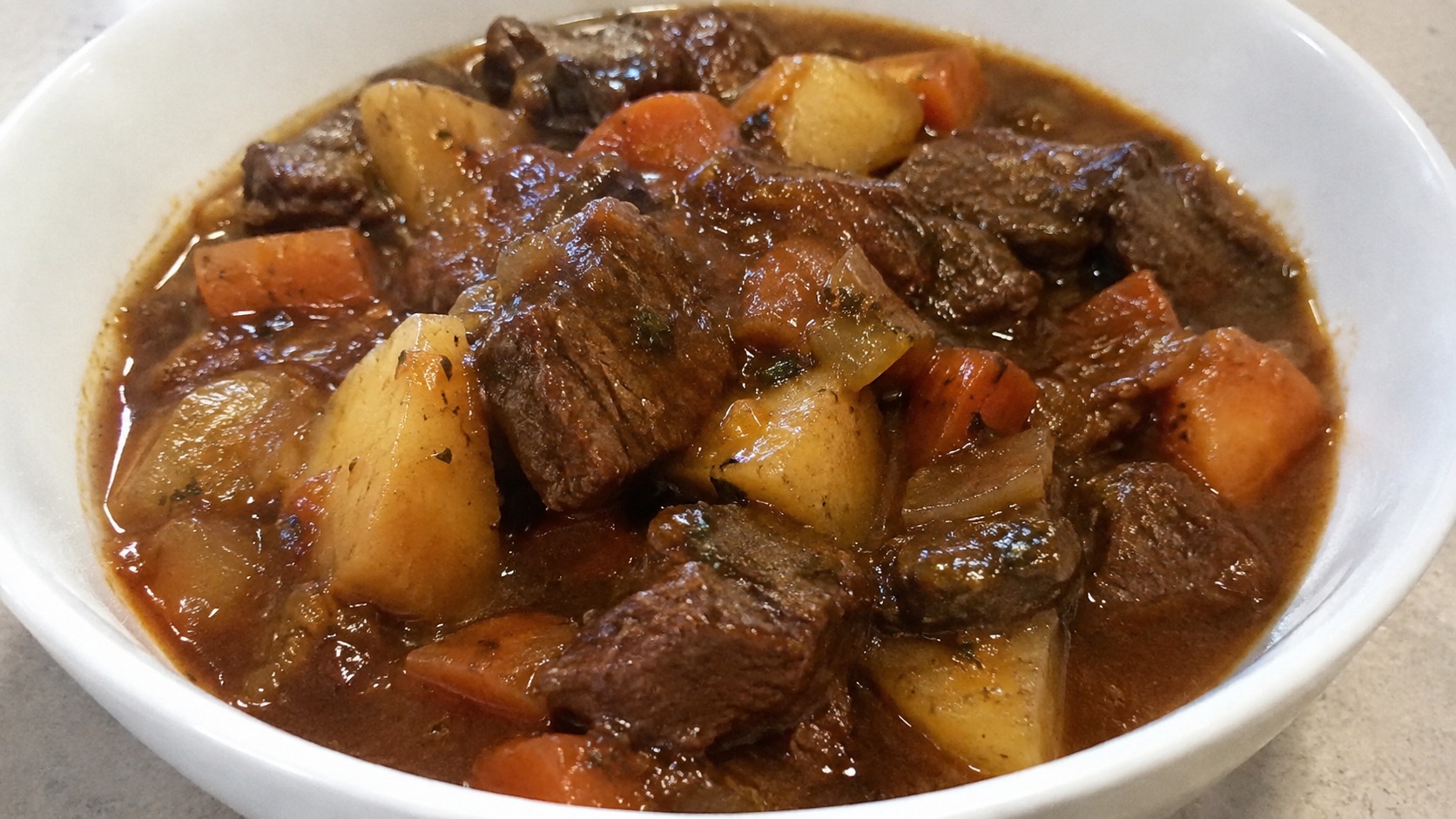
Delia Smith Beef Stew Recipe is a classic British-style braised beef dish made with well-browned beef, onions, carrots, herbs, and a rich gravy. The beef is cooked slowly until tender, while the vegetables absorb the savoury juices.
Ingredients
- 900 g stewing beef, cut into 4–5 cm chunks
- 2 tablespoons plain flour
- 2 tablespoons beef dripping or vegetable oil
- 2 medium onions, sliced
- 2 cloves garlic, finely chopped
- 450 g carrots, peeled and cut into thick chunks
- 2 tablespoons tomato purée
- 600 ml beef stock
- 150 ml red wine
- 2 bay leaves
- 1 teaspoon dried thyme
- Salt and freshly ground black pepper
- 1 tablespoon Worcestershire sauce, optional
- 1 tablespoon chopped fresh parsley, to finish
How to Make Delia Smith Beef Stew
Step 1
Heat the oven to 160°C (140°C fan)/Gas Mark 3.
Pat the beef dry with kitchen paper. Season it generously with salt and black pepper, then toss it with the flour.
Heat the dripping or oil in a large flameproof casserole over medium-high heat. Brown the beef in batches, giving each piece enough room to develop a deep brown crust. Transfer the browned beef to a plate.
Step 2
Lower the heat slightly and add the onions to the same casserole. Cook for about 5–7 minutes, stirring occasionally, until softened and lightly browned.
Add the garlic and tomato purée and cook for about 1 minute. Pour in the red wine, scraping the browned pieces from the bottom of the pan. Let the wine bubble for 2–3 minutes.
Return the beef and its juices to the casserole. Add the beef stock, carrots, bay leaves, thyme, and Worcestershire sauce if using. The liquid should come roughly two-thirds of the way up the meat.
Step 3
Bring the stew just to a gentle simmer. Cover the casserole with a tight-fitting lid and transfer it to the oven.
Cook for 2½–3 hours, stirring once or twice, until the beef is fork-tender and the gravy is thick and glossy. If the gravy is thinner than you like, remove the lid for the final 20–30 minutes of cooking.
Taste before serving and adjust the salt and pepper. Remove the bay leaves and scatter over the fresh parsley.
For the deepest flavour, let the finished stew rest for 10–15 minutes before serving. Like many slow-cooked beef dishes, it can also taste even better after being chilled and reheated the following day.
What to Serve With Delia Smith Beef Stew
Serve the stew with something that can soak up the gravy. Creamy mashed potatoes are the traditional choice, but boiled potatoes, buttered noodles, dumplings, or crusty bread all work well.
For vegetables, try:
- Buttered green beans
- Steamed cabbage
- Peas
- Roasted parsnips
- Roasted root vegetables
A spoonful of horseradish alongside the beef gives the rich gravy a sharp contrast.
Delia Smith Beef Stew Nutrition Information
Approximate nutrition per serving, assuming 6 servings:
| Nutrient | Approximate amount |
|---|---|
| Calories | 500–550 kcal |
| Protein | 45–50 g |
| Fat | 25–30 g |
| Carbohydrates | 25–30 g |
| Fibre | 5–6 g |
| Sodium | 700–900 mg |
Values vary according to the cut of beef, amount of cooking fat, stock, wine, and portion size. Serving the stew with mashed potatoes or bread will increase the carbohydrate and calorie content.
FAQs
What cut of beef is best for this stew?
Chuck, braising steak, shin, or other well-marbled stewing cuts are good choices. Tougher cuts contain connective tissue that breaks down during slow cooking, producing tender meat and a fuller gravy.
Why is my beef stew tough?
Usually, the beef needs more cooking time. Stewing meat can become tender only after its connective tissue has had enough time to soften. Keep the temperature gentle and continue cooking until the meat yields easily to a fork.
Can I make this stew without red wine?
Yes. Replace the wine with additional beef stock. For a little extra acidity, add a small splash of Worcestershire sauce or a teaspoon of red wine vinegar near the end of cooking.
Can I make the stew ahead?
Yes. Cool it promptly, refrigerate it, and reheat it thoroughly before serving. The flavours often become more rounded after a night’s rest.
How do I thicken the gravy?
The flour coating on the beef should provide some thickening. If the gravy remains too thin, simmer the stew uncovered for a while to reduce it. You can also mix a small amount of plain flour with cold water and add it gradually, allowing the stew to simmer afterward so the flour cooks properly.