

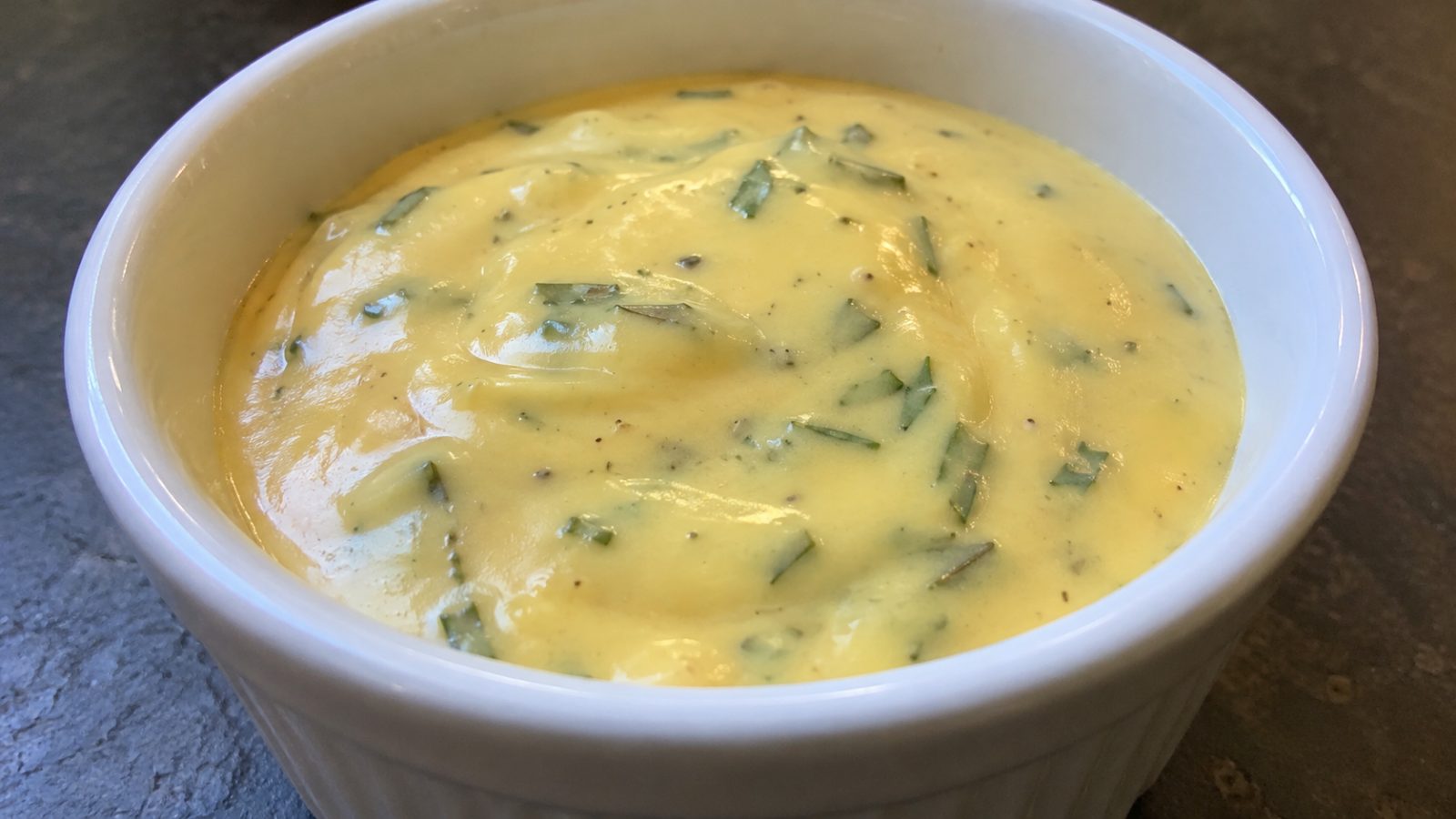
Béarnaise is a classic French sauce made from egg yolks, melted butter, vinegar, and tarragon. You’ll find that same traditional combination in Delia Smith Béarnaise Sauce Recipe, with a rich, creamy texture and a slightly sharp herbal flavour that goes especially well with steak.
Ingredients
This recipe makes approximately 4 servings and takes around 25 minutes to prepare and cook.
2 large egg yolks
150g unsalted butter
2 tablespoons white wine vinegar
2 tablespoons dry white wine
1 small shallot, finely chopped
1 tablespoon fresh tarragon, finely chopped
1 teaspoon fresh chervil, finely chopped (optional)
4 black peppercorns, lightly crushed
1 teaspoon fresh lemon juice
Salt, to taste
Freshly ground black pepper, to taste
1 tablespoon warm water, if needed
Fresh tarragon gives béarnaise its familiar anise-like flavour, while the vinegar and wine stop the butter from tasting too heavy. I recommend using unsalted butter because you can control the seasoning more easily. Fresh herbs are also worth using here, especially tarragon, since their flavour is one of the main reasons béarnaise tastes different from hollandaise.
How to Make Delia Smith Béarnaise Sauce
Step 1: Prepare the Vinegar and Tarragon Reduction
Put the chopped shallot, white wine vinegar, dry white wine, crushed peppercorns, and half the tarragon into a small saucepan. Place over medium heat and bring to a gentle simmer.
Let the mixture cook for about 5–7 minutes, until the liquid has reduced to approximately 2 tablespoons. The vinegar will become more concentrated, while the shallot and tarragon release their flavour into the liquid.
Remove the saucepan from the heat and strain the mixture through a fine sieve into a small bowl. Press the shallots lightly to extract the remaining liquid, then discard the solids.
Leave the reduction to cool slightly while you melt the butter in another saucepan over low heat. The butter should be warm and completely melted, but not bubbling or boiling.
Step 2: Whisk the Egg Yolks and Butter
Pour a few centimetres of water into a saucepan and bring it to a gentle simmer. Place a heatproof bowl over the saucepan, keeping the bottom of the bowl above the water.
Add the egg yolks and strained vinegar reduction to the bowl. Whisk continuously for 2–3 minutes until the mixture looks pale, creamy, and slightly thicker.
Start adding the warm melted butter very slowly, whisking constantly. Begin with a few drops at a time. Once the yolks and butter have started combining smoothly, continue adding the butter in a thin stream.
Keep the water barely simmering throughout this process. Too much heat can scramble the yolks, leaving you with a lumpy sauce instead of a smooth one.
The sauce should gradually thicken as you whisk in the butter. If it becomes too thick, add a teaspoon of warm water and continue whisking until it loosens.
My advice for anyone trying Delia Smith Béarnaise Sauce Recipe for the first time is to be patient with the butter. Adding it slowly is the easiest way to keep the sauce smooth and prevent the ingredients from separating.
Step 3: Add the Herbs and Finish the Sauce
Take the bowl off the heat once all the butter has been incorporated. Stir in the remaining fresh tarragon, chopped chervil if using, and lemon juice.
Season with salt and freshly ground black pepper. Taste before adding more lemon juice because the vinegar reduction already gives the sauce a noticeable sharpness.
A good béarnaise should be creamy and thick enough to coat the back of a spoon, but still soft enough to pour over steak.
Serve the sauce warm, preferably straight after making it. Avoid putting it back over direct heat because it can separate quite quickly.
What to Serve With Delia Smith Béarnaise Sauce
Béarnaise is traditionally served with grilled or pan-fried meat, especially steak. Its buttery texture goes well with beef, and the vinegar and tarragon help balance the richness.
Grilled steak: Sirloin, ribeye, and fillet steak are excellent choices. Spoon a little warm sauce over the steak just before serving. Personally, I think béarnaise tastes particularly good with a medium-rare sirloin.
Roast beef: Serve the sauce alongside slices of roast beef, roasted potatoes, and green vegetables.
Grilled salmon: Salmon has enough natural richness to pair nicely with the sauce, while the tarragon adds a fresh herbal taste.
Steamed asparagus: Asparagus is another traditional accompaniment for butter-based sauces. Drizzle a small amount of béarnaise over the cooked spears.
Roasted potatoes: Crispy roast potatoes are delicious dipped into warm béarnaise, especially when served alongside steak or grilled chicken.
Delia Smith Béarnaise Sauce Nutrition Information
The following values are approximate and calculated per serving, based on four servings.
Nutrient | Amount per serving |
|---|---|
Calories | 300 kcal |
Total Fat | 33g |
Saturated Fat | 20g |
Carbohydrates | 1g |
Protein | 2g |
Sugar | Less than 1g |
Cholesterol | 175mg |
Sodium | 25mg before added salt |
Most of the calories come from butter and egg yolks. Béarnaise is a rich sauce, so a few spoonfuls are usually enough to accompany a serving of meat or vegetables.
FAQs
What is the difference between béarnaise and hollandaise sauce?
Both sauces contain egg yolks and butter, but their flavourings are different. Hollandaise usually has a lemon flavour, while béarnaise gets its distinctive taste from tarragon, shallots, and a vinegar reduction. Béarnaise has a stronger herbal taste and is commonly served with steak.
Why does my béarnaise sauce split?
The sauce can separate if the butter is added too quickly or the egg yolks become too hot. To rescue it, place a teaspoon of warm water in a clean bowl and gradually whisk in the separated sauce. This often helps bring the mixture back together.
Can I make béarnaise sauce ahead of time?
You can prepare the vinegar and tarragon reduction ahead of time, but the finished sauce tastes best when freshly made. Because it contains egg yolks and butter, it does not store or reheat as easily as ordinary sauces. Use pasteurised egg yolks for anyone at greater risk from lightly cooked eggs.
Can I use dried tarragon instead of fresh?
Yes. Use approximately 1 teaspoon of dried tarragon instead of 1 tablespoon of fresh tarragon. Add it during the vinegar reduction so the herb has time to release its flavour. Fresh tarragon gives a brighter taste, but dried tarragon is a reasonable substitute.
How thick should béarnaise sauce be?
Béarnaise should have a smooth, creamy consistency similar to a thick pouring sauce. It should coat the back of a spoon without becoming stiff. If it gets too thick, whisk in a little warm water until it reaches the consistency you prefer.
Can I reheat béarnaise sauce?
Béarnaise is difficult to reheat because the butter can separate from the egg yolks. If the sauce has been refrigerated promptly, you can try warming it very gently over barely warm water while whisking continuously. Avoid direct heat and never let it boil. For the best flavour and texture, fresh béarnaise is always my preference.