

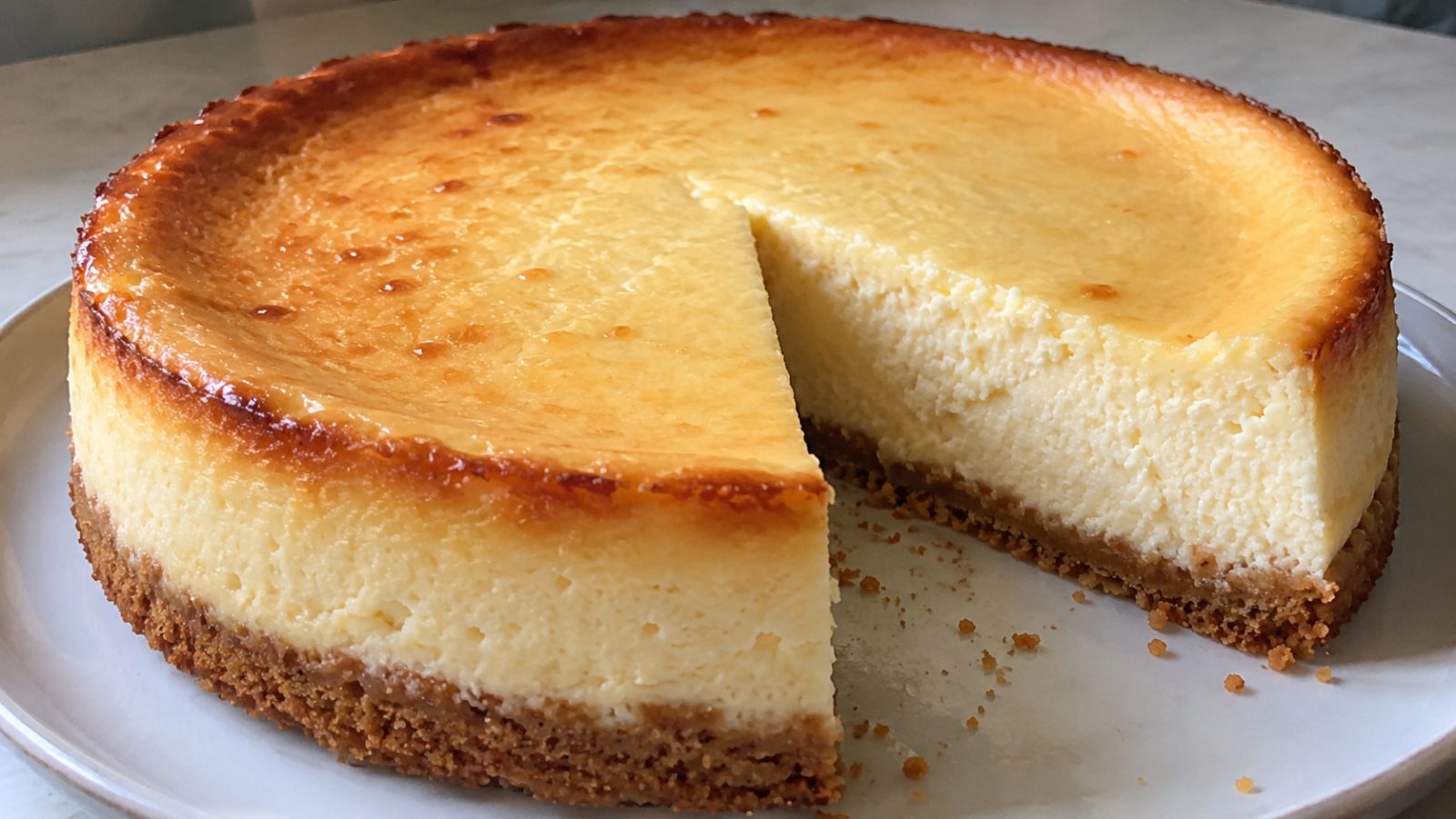
Baked cheesecake is known for its rich cream cheese filling, which sets gently in the oven and becomes firm after chilling. With a buttery biscuit base and a smooth vanilla filling, Delia Smith Baked Vanilla Cheesecake Recipe makes a classic dessert with a rich, creamy texture.
Ingredients
This cheesecake serves 8–10 people. Preparation takes around 25 minutes, baking takes 65–80 minutes including the biscuit base, and chilling requires at least 4 hours.
For the Biscuit Base:
200g digestive biscuits
85g unsalted butter, melted
1 tablespoon caster sugar (optional)
For the Vanilla Filling:
600g full-fat cream cheese, at room temperature
150g caster sugar
3 large eggs
150ml soured cream
2 teaspoons vanilla extract
1 tablespoon cornflour
1 teaspoon finely grated lemon zest (optional)
For Serving:
Fresh raspberries or strawberries
Lightly whipped double cream
Icing sugar for dusting (optional)
I recommend using full-fat cream cheese for this recipe. It gives the filling a rich taste and helps it hold its shape after chilling. Philadelphia-style cream cheese is a good choice, although other full-fat varieties can also be used.
How to Make Delia Smith Baked Vanilla Cheesecake
Step 1: Prepare the Biscuit Base
Preheat your oven to 160°C (140°C fan) or 325°F. Grease a 20cm (8-inch) springform cake tin and line the bottom with baking parchment.
Place the digestive biscuits in a food processor and blend until they become fine crumbs. If you don’t have a food processor, put the biscuits in a food bag and crush them with a rolling pin.
Transfer the biscuit crumbs to a bowl and pour in the melted butter. Add the caster sugar if using, then stir until the crumbs are evenly coated.
Press the mixture firmly into the bottom of the prepared tin. A spoon or the bottom of a drinking glass will help you create an even layer.
Bake for 10 minutes, then remove the tin from the oven and leave the base to cool while you prepare the filling. This gives the biscuits a firmer texture and prevents them from becoming too soft beneath the cheesecake.
Step 2: Make the Vanilla Cheesecake Filling
Place the cream cheese in a large mixing bowl and beat it gently until smooth. Add the caster sugar and cornflour, mixing until everything is combined.
Crack the eggs into the bowl one at a time, mixing briefly after each addition. Keep the mixer on a low speed because too much air in the filling can cause cracks during baking.
Add the soured cream, vanilla extract, and lemon zest if using. Stir gently until you have a smooth, thick mixture without visible lumps.
Pour the cheesecake filling over the cooled biscuit base. Spread it evenly with a spatula, then tap the tin lightly against the worktop to release any large air bubbles.
The filling should look creamy and smooth before it goes into the oven. I prefer mixing cheesecake filling by hand once the eggs are added because it gives better control and prevents unnecessary beating.
Step 3: Bake and Chill the Cheesecake
Place the cheesecake on the middle shelf of the oven and bake for approximately 55–70 minutes.
Check the cheesecake towards the end of baking. The edges should look set, while the centre should still wobble slightly when you gently move the tin. Don’t wait until the entire surface becomes completely firm because the cheesecake will continue setting as it cools.
Turn off the oven and leave the cheesecake inside for about an hour with the door slightly open. This gradual cooling helps prevent cracks.
Remove the cheesecake and allow it to cool completely at room temperature. Cover and refrigerate for at least 4 hours, preferably overnight.
Before serving, run a thin knife around the inside of the tin and carefully release the springform ring. Use a sharp knife to cut the cheesecake into slices, wiping the blade clean between cuts.
What to Serve With Delia Smith Baked Vanilla Cheesecake
Fresh berries are among the best accompaniments for vanilla cheesecake. Raspberries have a slightly sharp taste that goes well with the sweet filling, while strawberries add natural sweetness.
For Delia Smith Baked Vanilla Cheesecake Recipe, I prefer serving a slice with fresh raspberries and a small spoonful of whipped cream. The cheesecake is already rich, so a simple topping is usually enough.
You can also serve it with homemade berry compote, a little lemon curd, or fresh sliced peaches. If you enjoy chocolate, a small drizzle of melted dark chocolate tastes good with the vanilla filling.
Keep the cheesecake refrigerated until serving. Taking it out about 10–15 minutes before cutting can make the creamy texture more noticeable without letting it become too warm.
Delia Smith Baked Vanilla Cheesecake Nutrition Information
The following nutritional values are approximate and based on 10 servings without additional toppings.
Nutrient | Amount Per Serving |
|---|---|
Calories | 475 kcal |
Protein | 9g |
Carbohydrates | 39g |
Fat | 32g |
Saturated Fat | 19g |
Sugar | 25g |
Fibre | 1g |
Sodium | 320mg |
The exact values depend on the cream cheese, biscuits, and other ingredients used.
FAQs
Why Did My Baked Vanilla Cheesecake Crack?
Cheesecake can crack if the filling is overmixed, the oven temperature is too high, or the cake cools too quickly. Avoid beating the eggs excessively and allow the cheesecake to cool gradually in the switched-off oven.
Can I Make Vanilla Cheesecake the Day Before?
Yes, and I recommend it. Overnight chilling gives the cheesecake enough time to become firm and makes it easier to cut clean slices. Keep it covered in the refrigerator until you are ready to serve.
Can I Use Low-Fat Cream Cheese?
You can, but the filling may be softer and less creamy. Full-fat cream cheese gives baked cheesecake a richer flavour and firmer texture, so it’s the better choice for this recipe.
How Long Does Baked Vanilla Cheesecake Last?
Baked vanilla cheesecake can be stored in the refrigerator for 3–4 days. Keep it covered or inside an airtight container to prevent it from drying out or absorbing other food smells.
Can I Freeze Baked Vanilla Cheesecake?
Yes. Once the cheesecake has cooled and chilled completely, wrap it tightly in food wrap and place it in a freezer-safe container. Freeze for up to 2 months for the best texture. Thaw overnight in the refrigerator before serving.
How Do I Know When My Cheesecake Is Ready?
A properly baked cheesecake should have firm edges and a slightly wobbly centre. If the middle still looks liquid, continue baking for another 5–10 minutes and check again. The filling will become firmer as it cools and spends time in the refrigerator.