

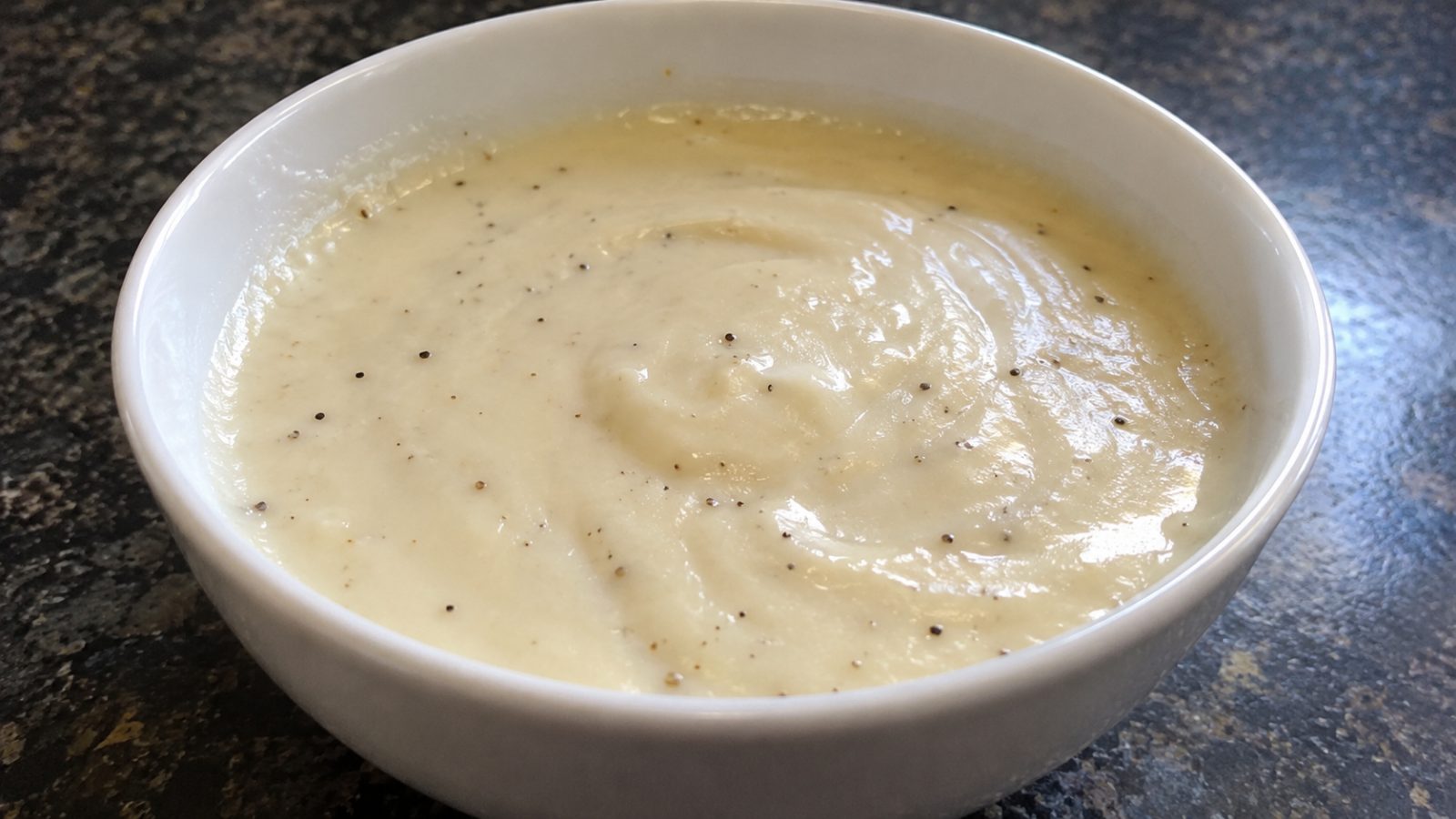
Béchamel is a classic French white sauce made from milk, butter, and flour, known for its smooth, creamy texture. For a traditional homemade version, Delia Smith Béchamel Sauce Recipe uses gently infused milk to give the sauce a richer flavour without overpowering the dish.
Ingredients
This recipe makes approximately 425 ml of béchamel sauce, enough for four servings.
425 ml (15 fl oz) whole milk
40 g (1½ oz) unsalted butter
20 g (¾ oz) plain flour
1 thick slice of onion
1 bay leaf
10 whole black peppercorns
A few fresh parsley stalks
1 small blade of mace (optional)
Salt, to taste
Freshly ground black pepper, to taste
A small pinch of grated nutmeg (optional)
Whole milk is my preferred choice because it gives béchamel a creamier consistency. Semi-skimmed milk can also be used, although the finished sauce will taste slightly lighter. The onion, bay leaf, and parsley give the milk a gentle savoury flavour, while mace and nutmeg add a little warmth.
How to Make Delia Smith Béchamel Sauce
Step 1: Infuse the Milk
Pour the milk into a small saucepan and add the onion, bay leaf, peppercorns, parsley stalks, and mace if using. Place the saucepan over low heat and warm the milk slowly until small bubbles begin appearing around the edges.
Avoid letting the milk boil. Once it is hot, remove the saucepan from the heat, cover it, and leave everything to infuse for about 10–15 minutes. This gives the herbs and spices enough time to flavour the milk without making it too strong.
Strain the milk through a fine sieve into a jug, removing the onion, herbs, and peppercorns. Keep the strained milk nearby while preparing the sauce.
I prefer not to rush this stage. Even a short infusion gives the finished béchamel a more interesting flavour than plain milk alone.
Step 2: Make the Butter and Flour Mixture
Place a clean saucepan over low heat and add the butter. Let it melt gently without browning, then add the flour all at once.
Stir continuously with a wooden spoon for approximately 1–2 minutes until you have a smooth paste. This butter-and-flour mixture is called a roux, and it thickens the sauce as the milk is added.
The roux should remain pale. If the butter or flour begins turning brown, the heat is too high. Béchamel should have a light colour, so keep the temperature gentle throughout this stage.
Start adding the infused milk a little at a time, stirring thoroughly after each addition. The mixture will become thick at first, but it should gradually loosen as more milk is incorporated.
Once about half the milk has been added, switch to a whisk and gradually pour in the remaining milk. Continue whisking until the mixture looks smooth and there are no visible lumps.
Step 3: Cook Until Smooth and Creamy
Return the saucepan to gentle heat and continue stirring as the sauce warms. Allow it to reach a very gentle simmer, then cook for approximately 5 minutes, stirring regularly to prevent it from sticking to the bottom.
The sauce should gradually thicken until it coats the back of a spoon. Run your finger across the spoon; if it leaves a clear line without the sauce immediately running back together, the consistency is about right.
Season with salt, freshly ground black pepper, and a little grated nutmeg if you enjoy its flavour. Taste before adding more seasoning, particularly if the sauce will later be mixed with cheese.
If the sauce becomes too thick, whisk in a small amount of warm milk. If it remains too thin, continue cooking gently for another minute or two.
Remove the saucepan from the heat once the sauce has reached your preferred thickness. It can be used immediately or kept warm over very low heat for a short time, with occasional stirring.
What to Serve With Delia Smith Béchamel Sauce
Béchamel goes particularly well with baked pasta, vegetables, and traditional oven dishes. Its mild flavour makes it easy to combine with cheese, herbs, meat, or fish without taking attention away from the main ingredients.
Lasagne is probably one of its best-known uses. Spread the béchamel between layers of pasta and meat sauce, then finish with a little grated Parmesan or Cheddar before baking. The sauce helps keep the pasta moist and gives the finished lasagne a creamy texture.
Cauliflower cheese is another classic choice. Pour the sauce over lightly cooked cauliflower, add grated mature Cheddar, and bake until golden. I find Delia Smith Béchamel Sauce Recipe particularly useful for this dish because the infused milk gives the cauliflower a pleasant savoury flavour without needing lots of extra ingredients.
You can also use béchamel for fish pie, spinach gratin, macaroni cheese, broccoli bake, and croque monsieur. For macaroni cheese, simply stir grated cheese into the finished sauce off the heat until melted.
Delia Smith Béchamel Sauce Nutrition Information
The following nutritional values are approximate and based on four servings.
Nutrient | Amount per serving |
|---|---|
Calories | 158 kcal |
Protein | 4 g |
Carbohydrates | 9 g |
Total fat | 13 g |
Saturated fat | 8 g |
Sugar | 5 g |
Fibre | Less than 1 g |
These estimates are based on whole milk, butter, and plain flour. Adding cheese or other ingredients will change the nutritional values.
FAQs
Why is my béchamel sauce lumpy?
Lumps usually form when milk is added too quickly to the flour and butter mixture. Add the milk gradually while stirring constantly, especially at the beginning. If lumps have already formed, whisk the sauce vigorously or pass it through a fine sieve.
Can I make béchamel sauce without butter?
Yes. You can replace butter with a similar amount of mild-flavoured cooking oil. The sauce will still thicken, although it will have a slightly different flavour. Butter gives traditional béchamel its characteristic richness.
How thick should béchamel sauce be?
Béchamel should be smooth and thick enough to coat the back of a spoon while still pouring easily. For lasagne, a slightly thinner sauce is usually easier to spread. For vegetable gratins, a thicker consistency helps the sauce stay around the vegetables.
Can I prepare béchamel sauce in advance?
Yes. Allow the sauce to cool quickly, transfer it to an airtight container, and refrigerate for up to two days. Reheat slowly over low heat, whisking regularly. Add a splash of milk if it has become too thick.
Can I freeze homemade béchamel sauce?
Yes. Once cooled, transfer the sauce into a freezer-safe container and freeze for up to two months. Thaw it overnight in the refrigerator before reheating. The sauce may separate slightly after freezing, but gentle heating and thorough whisking can help restore a smoother texture.
What is the difference between béchamel sauce and cheese sauce?
Béchamel is made with milk thickened by butter and flour, usually with simple seasoning. Cheese sauce starts with béchamel or another white sauce and includes grated cheese for a stronger, richer flavour. Cheddar, Gruyère, and Parmesan are common choices, depending on the dish.