

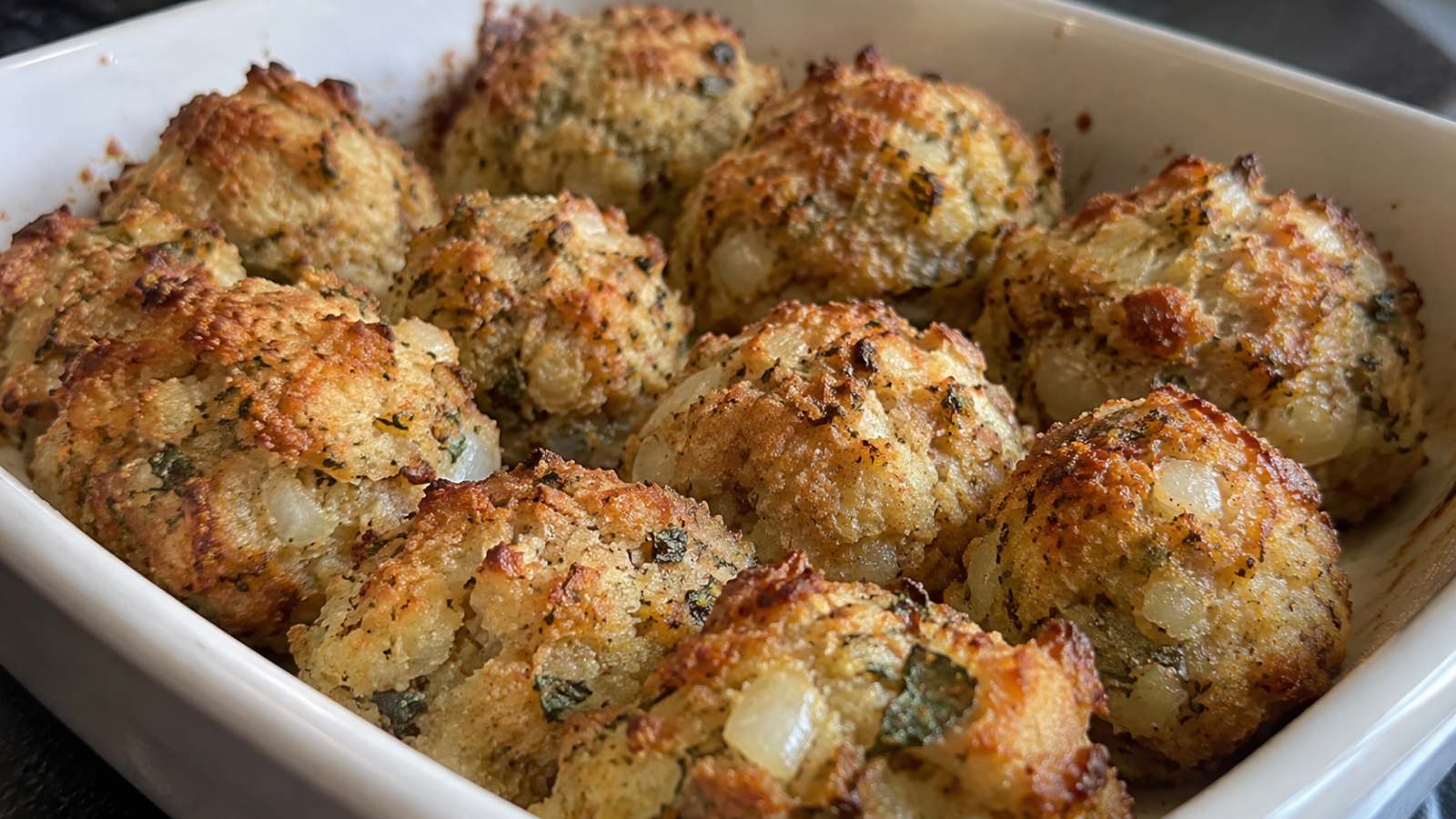
Sage and onion stuffing combines the sweetness of cooked onions with the strong, earthy flavour of fresh sage. Made with butter and soft breadcrumbs, Delia Smith Sage and Onion Stuffing Recipe gives you a traditional British stuffing with a moist centre and a lightly crisp, golden outside.
Ingredients
For this recipe, fresh breadcrumbs are a better choice than dried ones. They absorb the buttery onion juices without becoming too heavy. Fresh sage also gives the stuffing a cleaner, more fragrant taste, although dried sage is a reasonable substitute.
Ingredients for 8 servings:
2 large onions: Peeled and finely chopped.
50g unsalted butter: For cooking the onions and adding richness.
175g fresh white breadcrumbs: Made from slightly stale white bread.
1 heaped tablespoon fresh sage: Finely chopped.
1 large egg: Lightly beaten.
½ teaspoon salt: Or according to taste.
¼ teaspoon black pepper: Freshly ground.
Recipe details:
Preparation time: 15 minutes
Cooking time: 35–40 minutes
Total time: 50–55 minutes
Servings: 8
Oven temperature: 200°C (180°C fan) / 400°F / Gas Mark 6
You can make fresh breadcrumbs by removing the crusts from white bread and briefly processing the slices in a food processor. Keep the crumbs slightly coarse rather than turning them into a powder. I prefer day-old bread because it absorbs the butter nicely while keeping some texture.
How to Make Delia Smith Sage and Onion Stuffing
Step 1
Peel the onions and chop them finely. Try to keep the pieces roughly the same size so they soften evenly during cooking.
Melt the butter in a medium saucepan over low heat. Add the chopped onions, stir well, and cover with a lid. Leave them to cook gently for about 12–15 minutes, stirring occasionally to prevent sticking.
The onions should become completely soft and translucent without turning brown. Gentle cooking brings out their natural sweetness, which balances the stronger flavour of the sage.
Remove the saucepan from the heat once the onions are tender. Leave them to cool for a few minutes before mixing them with the remaining ingredients.
Step 2
Place the fresh breadcrumbs in a large mixing bowl. Add the softened onions along with all the melted butter left in the saucepan.
Sprinkle in the chopped sage, salt, and black pepper. Mix everything with a wooden spoon until the breadcrumbs have absorbed the buttery juices and the sage is evenly distributed.
Allow the mixture to cool until it is just warm, then add the beaten egg. Stir until the ingredients come together into a soft, slightly sticky mixture.
Press a small amount between your fingers to check its consistency. It should hold its shape without feeling overly wet.
If the mixture seems dry or crumbly, add a tablespoon of water or vegetable stock. If it feels too soft, mix in a little more fresh breadcrumbs. Avoid pressing or stirring too vigorously, as this can make the finished stuffing dense.
Step 3
Preheat the oven to 200°C (180°C fan) / 400°F / Gas Mark 6. Lightly grease a baking tray or cover it with baking parchment.
Divide the mixture into eight portions and gently roll each portion into a ball. Arrange the stuffing balls on the prepared tray, leaving a small gap between them.
Bake for 20–25 minutes, until the outside becomes lightly golden and crisp. Check that the centres are cooked through and have reached 74°C (165°F).
For a softer stuffing, spoon the mixture into a buttered ovenproof dish instead of shaping individual balls. Spread it evenly and bake for approximately 30–35 minutes, until the top is golden and the centre is thoroughly cooked.
Let the stuffing rest for about five minutes before serving. The outside should have a little crispness, while the inside remains tender and moist.
What to Serve With Delia Smith Sage and Onion Stuffing
Sage and onion stuffing is traditionally served with roast poultry or pork. Its savoury flavour goes particularly well with rich gravy, roasted vegetables, and potatoes.
Roast chicken: Serve the stuffing with roasted chicken, crispy potatoes, carrots, and chicken gravy. The sage brings a lovely herbal flavour to the meal without overpowering the chicken.
Roast turkey: Stuffing is a familiar part of a British Christmas dinner. It goes nicely with turkey, cranberry sauce, roast parsnips, and Brussels sprouts.
Roast pork: If you’re serving Delia Smith Sage and Onion Stuffing Recipe for Sunday lunch, roast pork with apple sauce is one of my favourite combinations. The sweetness of the apples works nicely with the sage and onions.
Vegetarian nut roast: The stuffing can also accompany a nut roast, steamed greens, and onion gravy. It adds a soft, savoury element to the plate.
Delia Smith Sage and Onion Stuffing Nutrition Information
The following nutritional values are approximate and based on eight servings. The actual amounts may change depending on the bread and butter used.
Nutrient | Amount per serving |
|---|---|
Calories | 130 kcal |
Protein | 3g |
Carbohydrates | 14g |
Total fat | 7g |
Saturated fat | 4g |
Fibre | 1.5g |
Sugar | 3g |
Using wholemeal breadcrumbs will increase the fibre content and give the stuffing a slightly nuttier taste.
FAQs
Can I use dried sage instead of fresh sage?
Yes. Replace the tablespoon of fresh sage with about one teaspoon of dried sage. Dried sage has a stronger, more concentrated flavour, so avoid adding too much at once.
Can I make sage and onion stuffing ahead of time?
Yes. Prepare the stuffing mixture, shape it into balls, and place them in a covered container in the refrigerator. Cook within 24 hours for the best freshness and texture.
Why is my sage and onion stuffing too dry?
Dry stuffing usually needs more moisture. Add a little water or vegetable stock to the mixture before baking. Fresh breadcrumbs also help keep the inside soft.
Can I freeze sage and onion stuffing?
Yes. Place uncooked stuffing balls in an airtight freezer-safe container and freeze for up to three months. Thaw them overnight in the refrigerator before cooking.
Can I cook the stuffing inside a chicken?
Yes, but cooking it separately is easier and gives the outside a nicer texture. If you stuff a chicken, fill the cavity loosely and make sure the centre of the stuffing reaches 74°C (165°F).
How do I store leftover sage and onion stuffing?
Allow the cooked stuffing to cool, then refrigerate promptly in an airtight container for up to three days. Reheat it in the oven until piping hot throughout, adding a small splash of stock if it has become dry.