

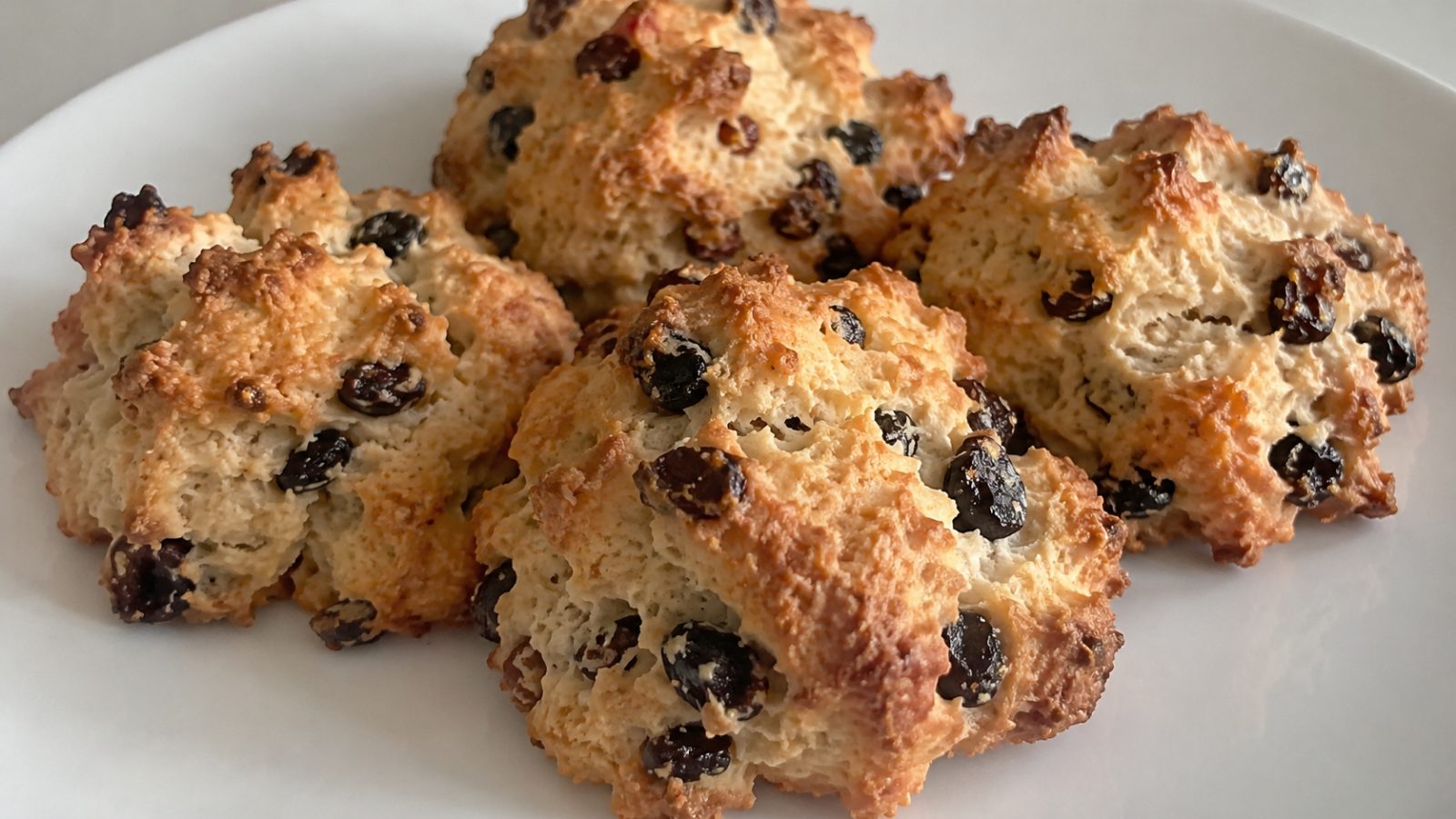
Rock cakes are traditional British fruit buns with rough, golden tops and soft, crumbly centres. For a simple homemade version, Delia Smith Rock Cakes Recipe combines buttery dough, dried fruit, and a little mixed spice.
Ingredients
This recipe makes approximately 10 rock cakes using ordinary baking ingredients. Cold butter gives the cakes their crumbly texture, while mixed dried fruit adds sweetness without making the dough too heavy.
225g self-raising flour
100g cold unsalted butter, cut into cubes
75g caster sugar
100g mixed dried fruit, including raisins, currants, or sultanas
1 large egg
2–3 tablespoons milk
½ teaspoon mixed spice
¼ teaspoon ground nutmeg (optional)
A small pinch of salt
1 tablespoon demerara sugar, for sprinkling
Finely grated zest of ½ lemon (optional)
Preparation Time: 15 minutes
Cooking Time: 15–20 minutes
Total Time: 30–35 minutes
Servings: 10 rock cakes
Oven Temperature: 200°C (180°C fan) / Gas Mark 6
How to Make Delia Smith Rock Cakes
Step 1: Prepare the Flour and Butter
Preheat your oven to 200°C (180°C fan) and line a large baking tray with baking parchment.
Sift the self-raising flour into a large mixing bowl. Add the mixed spice, nutmeg if using, and a pinch of salt. Stir everything together so the spices are evenly mixed through the flour.
Add the cold butter cubes and rub them into the flour using your fingertips. Continue until the mixture resembles coarse breadcrumbs, with no large pieces of butter remaining.
Keep your hands light and avoid working the mixture for too long. Butter that becomes too warm can make the finished cakes heavier and greasier.
Stir in the caster sugar, dried fruit, and lemon zest if you are using it. Mix gently until the fruit is evenly distributed.
Step 2: Make and Shape the Dough
Crack the egg into a small bowl and beat it lightly with two tablespoons of milk. Pour the mixture into the dry ingredients and stir with a fork or wooden spoon.
The dough should become thick, slightly sticky, and firm enough to hold its shape. If it looks too dry, add a little more milk, one teaspoon at a time.
Avoid adding too much liquid. Rock cake dough should be noticeably firmer than ordinary cake batter.
Using two tablespoons, divide the mixture into approximately 10 rough heaps on the prepared baking tray. Leave a little space between each one because the cakes will expand during baking.
Do not smooth the tops or try to make perfectly round shapes. Traditional rock cakes have uneven surfaces, with small peaks that turn golden and crisp in the oven.
Sprinkle the tops lightly with demerara sugar before baking.
Step 3: Bake the Rock Cakes
Place the baking tray on the middle shelf of the preheated oven and bake for 15–20 minutes.
The cakes should rise slightly and develop golden-brown tops. Their edges will feel firm, but the centres should remain tender.
Check them after 15 minutes, especially if your oven runs hot. Overbaking can leave rock cakes dry and unpleasantly hard.
Remove the tray from the oven and leave the cakes to cool for five minutes before transferring them to a wire rack.
I prefer rock cakes slightly warm because the crumb is softer and the buttery flavour comes through nicely. They are also good once completely cooled, especially with tea.
What to Serve With Delia Smith Rock Cakes
Rock cakes are traditionally served with afternoon tea. English breakfast tea, Earl Grey, and ordinary black tea with milk all go nicely with their sweet fruit flavour.
For a richer serving, cut a warm rock cake in half and spread a little salted butter inside. The butter softens against the warm crumb without overpowering the dried fruit.
Strawberry jam, raspberry jam, and lemon curd are also good choices. I would serve these separately because the cakes already contain sugar and naturally sweet fruit.
Coffee, hot chocolate, or a glass of cold milk are equally suitable, particularly if you are serving the cakes as an afternoon snack.
One thing I like about Delia Smith Rock Cakes Recipe is how little decoration the finished cakes need. Their rough, golden appearance is exactly what you want from a traditional homemade rock cake.
Delia Smith Rock Cakes Nutrition Information
The following values are approximate estimates for one rock cake, assuming the recipe makes 10 equal portions.
Nutrient | Amount Per Serving |
|---|---|
Calories | 230 kcal |
Carbohydrates | 33g |
Protein | 3g |
Total Fat | 9g |
Saturated Fat | 5g |
Sugar | 15g |
Fibre | 1g |
Sodium | 120mg |
The nutritional values will vary slightly depending on the dried fruit, butter, milk, and toppings used. Additional butter or jam will increase the calories per serving.
FAQs
Why are my rock cakes too hard?
Rock cakes usually become too hard because they have been overbaked, mixed too much, or made with insufficient liquid. The dough should be firm but slightly sticky before baking. Remove the cakes once their tops are golden and the centres are cooked through.
Can I use plain flour instead of self-raising flour?
Yes. Replace the self-raising flour with 225g plain flour and add approximately two teaspoons of baking powder. Mix the baking powder thoroughly into the flour before adding the butter.
Can I make rock cakes without dried fruit?
Yes. You can leave out the dried fruit or replace it with chocolate chips, chopped nuts, or dried cranberries. The traditional British version normally contains currants, raisins, or sultanas.
How long do homemade rock cakes stay fresh?
Rock cakes taste best on the day they are baked, but they can stay fresh for approximately two to three days in an airtight container at room temperature. Allow them to cool completely before storing so condensation does not soften their crust.
Can I freeze rock cakes?
Yes. Once completely cooled, place the rock cakes in a freezer-safe container or bag and freeze for up to three months. Thaw at room temperature before eating. You can warm them briefly in the oven to restore some of their crispness.
Why did my rock cakes spread during baking?
Excess milk or butter that has become too warm can cause rock cakes to spread. Use cold butter and add only enough milk to bring the mixture together. The dough should remain in rough heaps when placed on the baking tray.
Should rock cakes be soft or crunchy?
Traditional rock cakes should have a lightly crisp exterior and a soft, crumbly centre. They should not be as soft as sponge cakes or as hard as biscuits. The uneven tops become slightly crunchy during baking, while the inside stays tender.
Can I prepare rock cake dough in advance?
You can prepare the dry ingredients and rub in the butter ahead of time, then keep the mixture covered in the refrigerator. Add the egg and milk shortly before baking. For the best texture, shape and bake the cakes soon after adding the liquid so the raising agents can do their job in the oven.