

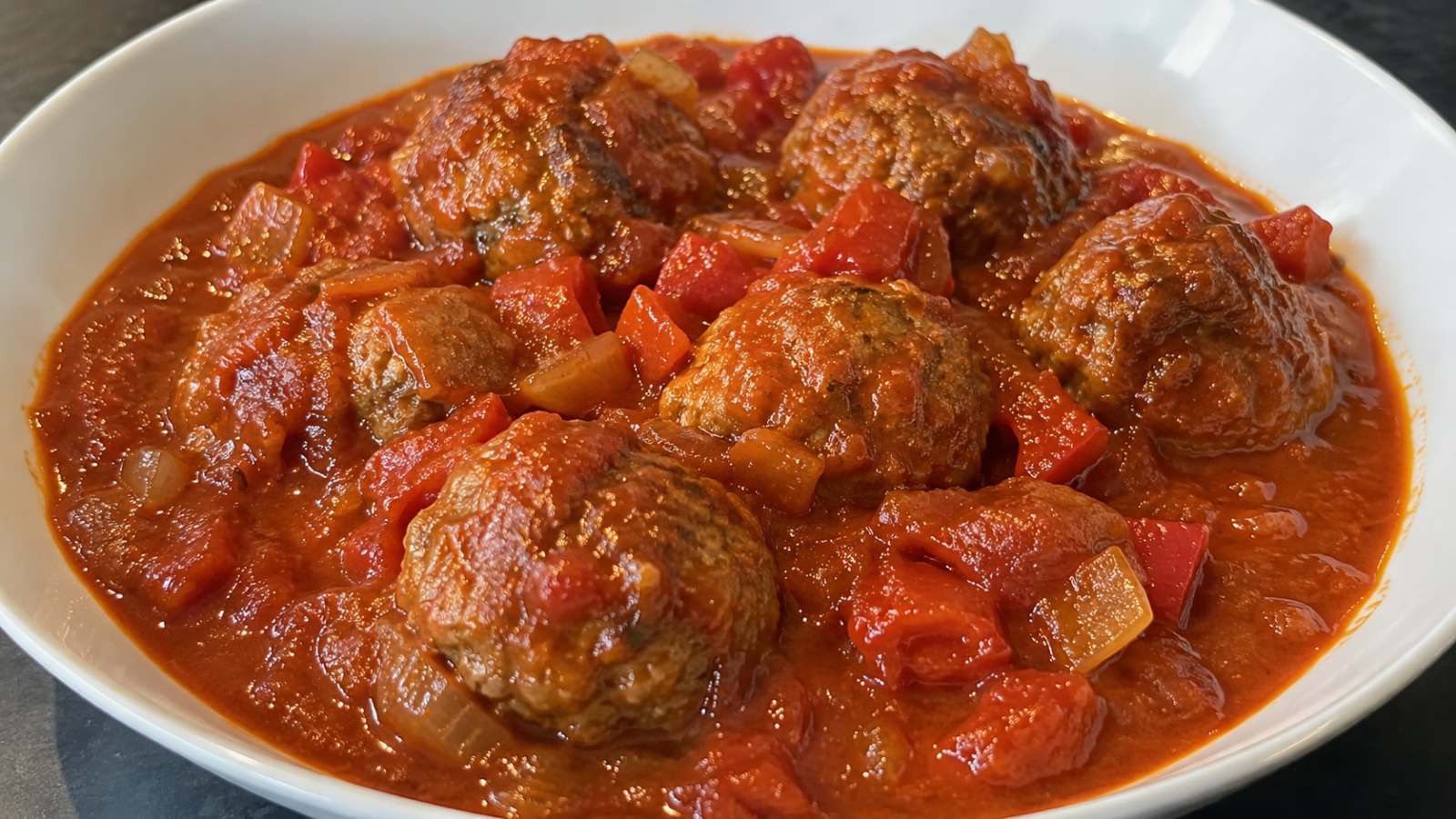
Tender meat in a rich paprika sauce is the familiar character of Hungarian-style goulash. For a homely variation on those flavours, Delia Smith Goulash Meatballs Recipe combines juicy beef and pork meatballs with tomatoes, red peppers, and a creamy sauce.
Ingredients
This recipe serves 4–6 people. Preparation takes around 25 minutes, with approximately 1 hour and 30 minutes of slow cooking.
For the Meatballs:
350g (12 oz) lean minced beef
350g (12 oz) minced pork
½ medium red pepper, finely chopped
1 small onion, finely chopped
1 garlic clove, crushed
2 tablespoons fresh parsley, chopped
50g (2 oz) fresh white breadcrumbs
1 large egg, beaten
1 rounded tablespoon plain flour
2 tablespoons olive oil
Salt and freshly ground black pepper
For the Goulash Sauce:
400g canned chopped tomatoes
1 rounded tablespoon Hungarian paprika
1 medium onion, finely chopped
½ medium red pepper, chopped
1 garlic clove, crushed
1 tablespoon olive oil
150ml water
100ml crème fraîche
Salt and freshly ground black pepper
A little extra paprika for serving
Hungarian paprika gives the sauce its familiar deep red colour. Sweet paprika produces a mild sauce, while hot paprika adds a noticeable kick. I prefer using sweet paprika with a small pinch of hot paprika because the flavour of the tomatoes and meat remains clear.
How to Make Delia Smith Goulash Meatballs
Step 1: Prepare the Meatballs
Preheat your oven to 140°C (275°F), Gas Mark 1, or approximately 120°C for a fan oven.
Put the minced beef and pork into a large mixing bowl. Add the finely chopped red pepper, onion, garlic, parsley, and breadcrumbs. Pour in the beaten egg and season generously with salt and black pepper.
Mix everything with your hands until the ingredients are evenly combined. Don’t knead the mixture for too long. Overworking minced meat makes the finished meatballs firm, while gentle mixing keeps them soft.
Divide the mixture into approximately 24 portions and roll each one into a ball. Try to keep them similar in size so they cook evenly.
Season the flour with a little salt and pepper, then spread it across a plate. Roll each meatball lightly in the flour, shaking away the excess.
Heat 2 tablespoons of olive oil in a large ovenproof casserole over medium-high heat. Brown the meatballs in batches, turning them carefully until the outside develops a golden colour.
You only need to brown the surface at this stage. The meatballs will finish cooking slowly in the sauce. Transfer them to a clean plate while you prepare the vegetables.
Step 2: Make the Goulash Sauce
Add another tablespoon of olive oil to the casserole and reduce the heat to medium. Put in the chopped onion and red pepper, then cook for about 5–7 minutes, stirring occasionally.
The onion should become soft and slightly golden, while the pepper begins to lose its firmness.
Add the crushed garlic and cook for another minute. Sprinkle in the paprika and stir for about 20 seconds, allowing it to mix with the warm oil and vegetables.
Don’t leave paprika frying on its own for too long because it burns easily and becomes bitter.
Pour in the chopped tomatoes and 150ml water. Stir thoroughly, scraping the browned pieces from the bottom of the casserole. Those browned juices give the sauce additional flavour.
Season with salt and black pepper, then bring the sauce to a gentle simmer. Let it cook uncovered for about 5 minutes.
At this point, the sauce should be slightly thick but still have enough liquid to surround the meatballs. Add a little more water if necessary.
Step 3: Cook the Meatballs Slowly
Return the browned meatballs to the casserole, including any juices collected on the plate. Arrange them in a single layer where possible and spoon some tomato sauce over each one.
Cover the casserole with a tight-fitting lid and place it in the preheated oven.
Cook for approximately 1 hour and 30 minutes. The gentle heat allows the meatballs to absorb the paprika sauce without drying out. Check near the end of cooking that the sauce hasn’t reduced too much.
Once the meatballs are tender and thoroughly cooked, with the centres reaching at least 71°C (160°F), remove the casserole from the oven.
Stir the crème fraîche gently into the hot sauce, taking care not to break the meatballs. It softens the acidity of the tomatoes and gives the sauce a smooth, creamy finish.
Taste and adjust the seasoning. Sprinkle a little extra paprika over the top before bringing the casserole to the table.
What to Serve With Delia Smith Goulash Meatballs
Goulash meatballs have a thick sauce that goes particularly well with potatoes, noodles, and rice. I think simple side dishes are the best choice here because the paprika already gives the meal plenty of character.
Buttered egg noodles: Soft noodles absorb the tomato and paprika sauce and are a classic choice alongside this style of meat dish.
Creamy mashed potatoes: Mashed potatoes are especially good for soaking up the rich sauce.
Steamed white rice: Plain rice balances the stronger paprika flavour and makes a filling dinner.
Crusty bread: A few slices of fresh bread are useful for soaking up the sauce left on the plate.
Steamed green beans: Their fresh flavour and slightly crisp texture balance the richness of the meatballs.
One reason I enjoy Delia Smith Goulash Meatballs Recipe is that it doesn’t need an elaborate side dish. A generous spoonful of meatballs over buttered noodles, with some sauce poured on top, makes a lovely dinner.
Delia Smith Goulash Meatballs Nutrition Information
The following nutritional values are approximate per serving, based on six portions without accompanying side dishes.
Nutrient | Approximate Amount |
|---|---|
Calories | 450 kcal |
Protein | 27g |
Carbohydrates | 14g |
Fat | 32g |
Saturated Fat | 12g |
Fibre | 2g |
Sodium | 350mg |
The exact figures depend on the fat content of the beef and pork, the crème fraîche used, and how much seasoning is added.
FAQs
Can I make goulash meatballs ahead of time?
Yes. You can prepare and cook the meatballs a day before serving. Allow them to cool, then refrigerate in a covered container within two hours. Reheat gently in the sauce until piping hot throughout. The paprika flavour can become more pronounced after the meatballs have rested overnight.
Can I use only beef for the meatballs?
Yes, you can use 700g of minced beef instead of combining beef and pork. Choose beef with some fat content to prevent the meatballs from becoming dry. The pork normally contributes tenderness, so using extremely lean beef may produce a firmer texture.
What can I use instead of crème fraîche?
Full-fat sour cream is a good alternative. It gives the sauce a similar creamy texture and slightly tangy flavour. Stir it in at the end of cooking over very low heat, avoiding a vigorous boil that could cause it to separate.
Why are my meatballs falling apart?
Meatballs can fall apart if the mixture contains too much moisture or hasn’t been combined sufficiently. The egg and breadcrumbs help hold everything together. Chopping the vegetables finely and browning the meatballs before simmering also helps them keep their shape.
Can I freeze goulash meatballs?
Yes. Place the cooled meatballs and sauce in airtight freezer-safe containers and freeze for up to three months for best quality. Thaw overnight in the refrigerator before reheating. If you plan to freeze the dish, it’s often preferable to add the crème fraîche after reheating because creamy sauces can separate during freezing.
How can I make the sauce thicker?
Remove the casserole lid during the final 10–15 minutes of cooking to allow some liquid to evaporate. Alternatively, lift out the cooked meatballs and simmer the sauce gently on the stovetop until it reaches your preferred consistency. Return the meatballs to the sauce before serving.