

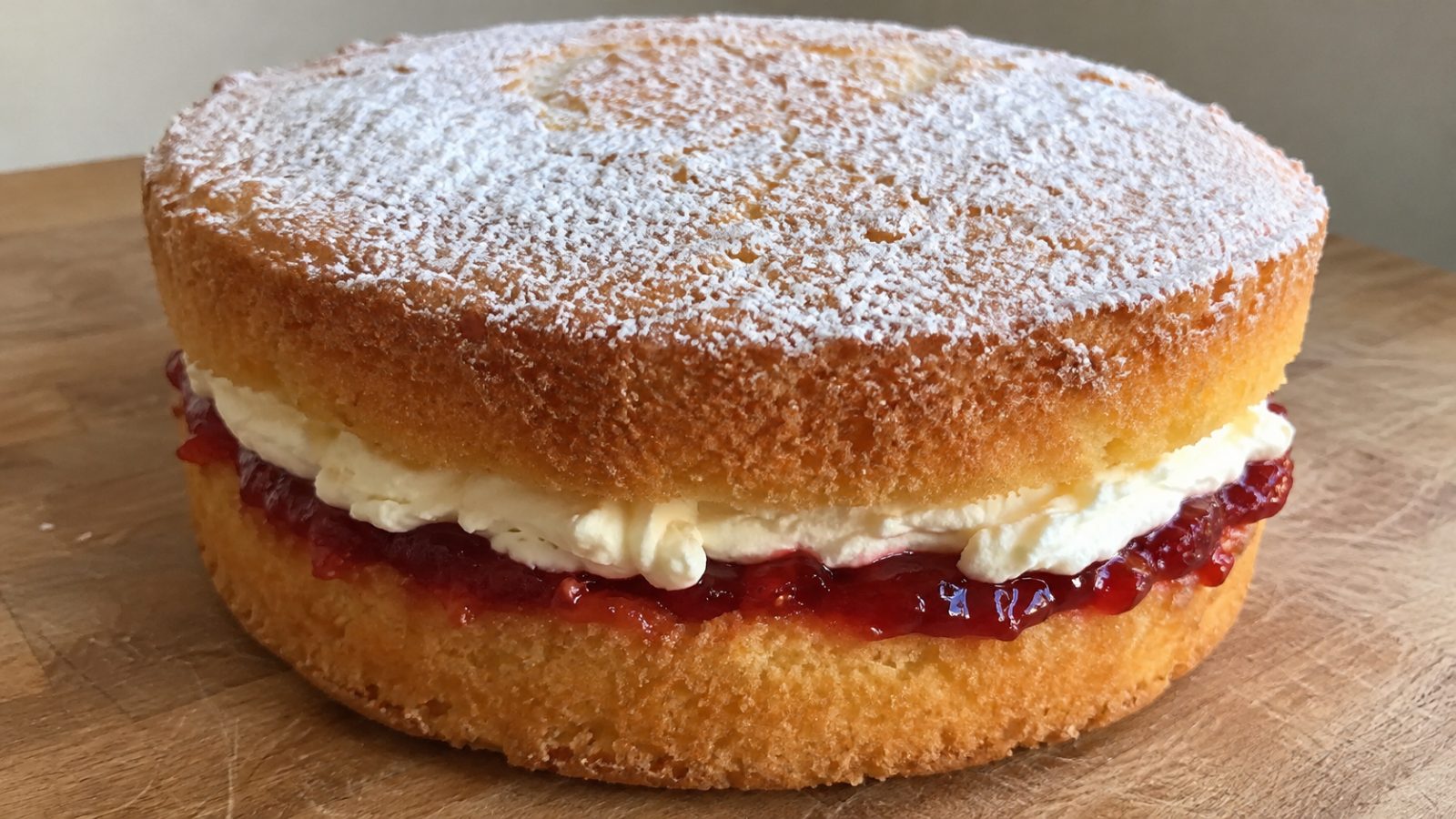
Victoria sponge has two soft, golden cake layers sandwiched together with fruit jam and finished with a light dusting of sugar. The all-in-one method used in Delia Smith Victoria Sponge Cake Recipe makes it easy to prepare a light, buttery sponge at home.
Ingredients
For the sponge cake:
175g (6 oz) self-raising flour
175g (6 oz) unsalted butter, softened
175g (6 oz) golden caster sugar
3 large eggs, at room temperature
1 rounded teaspoon baking powder
½ teaspoon vanilla extract
1 tablespoon milk, if needed
For the filling:
4 tablespoons raspberry or strawberry jam
150ml double cream (optional)
1 teaspoon icing sugar, optional for the cream
For the topping:
– 1 tablespoon icing sugar, for dusting
Equipment: Two 20cm (8-inch) round sandwich cake tins, baking parchment, a large mixing bowl, an electric hand mixer and a wire cooling rack.
Preparation time: 15 minutes Cooking time: 30–35 minutes Cooling time: 45 minutes Servings: 8 slices
How to Make Delia Smith Victoria Sponge Cake
Step 1: Prepare the Tins and Cake Batter
Preheat your oven to 170°C (325°F), or 150°C if using a fan oven. Grease two 20cm round sandwich cake tins with a little butter, then line their bases with baking parchment. Set them aside while you prepare the mixture.
Sift the self-raising flour and baking powder into a large mixing bowl. Add the softened butter, golden caster sugar, eggs and vanilla extract. Beat everything together with an electric hand mixer for about one minute, until the ingredients have combined into a smooth, creamy batter.
Delia Smith is well known for using the all-in-one method in sponge cakes. Instead of creaming butter and sugar separately, everything goes into the bowl together. It saves preparation time and produces a good sponge when the ingredients are measured correctly.
The butter should be soft enough to press easily with your finger. Cold butter will leave lumps in the batter, while melted butter can affect the finished texture.
Lift a spoonful of batter to check its consistency. It should fall slowly from the spoon with a gentle tap. If it seems too thick, mix in one tablespoon of milk. Avoid beating longer than necessary once everything is combined.
Step 2: Bake the Sponge Cakes
Divide the mixture evenly between your prepared tins. Spread it towards the edges with the back of a spoon, then smooth the tops so both cakes bake evenly.
Place the tins on the middle shelf of the oven and bake for 30–35 minutes. The cakes should gradually rise and turn a light golden brown.
Keep the oven door closed for at least the first 20 minutes. Opening it too early can cause the sponge to sink before the centre has finished cooking.
After 30 minutes, check the cakes by pressing the centre lightly with your finger. A properly baked sponge should spring back. You can also insert a skewer into the middle; it should come out clean without wet batter.
Remove the cakes from the oven and leave them in their tins for five minutes. Carefully turn them out onto a wire rack, remove the baking parchment and allow them to cool completely.
I prefer checking the sponge a few minutes before the suggested baking time finishes. Oven temperatures vary, and removing the cakes as soon as they are cooked helps prevent dry edges.
Step 3: Prepare the Filling and Assemble the Cake
If using cream, pour the cold double cream into a mixing bowl and whisk until it forms soft peaks. Add one teaspoon of icing sugar if you prefer a slightly sweeter filling. Avoid overwhipping, as the cream can quickly become thick and grainy.
Place one sponge layer on a serving plate with its flat side facing upwards. Spread the raspberry or strawberry jam evenly over the surface, leaving a small gap around the edges.
For a jam-only Victoria sponge, place the second cake directly on top. If adding cream, spread the whipped cream gently over the jam before positioning the second layer.
Set the second sponge on top with its golden side facing upwards. Press very lightly so the layers stay together without pushing out the filling.
Finally, sift a little icing sugar over the surface. You don’t need thick frosting or elaborate decorations. The traditional appearance of a Victoria sponge is simple, with the golden cake and filling clearly visible.
If you’re preparing Delia Smith Victoria Sponge Cake Recipe for afternoon tea, I recommend assembling the cake shortly before serving, particularly when using fresh whipped cream. The sponge stays softer, and the filling tastes fresher.
What to Serve With Delia Smith Victoria Sponge Cake
Victoria sponge is traditionally enjoyed with a cup of tea, although it also makes a good dessert after lunch. Its buttery flavour and sweet jam filling go nicely with fresh fruit and unsweetened drinks.
English breakfast tea: A classic pairing that balances the sweetness of the cake.
Fresh strawberries: Serve a handful alongside each slice, especially if using strawberry jam.
Fresh raspberries: Their slightly sharp flavour goes well with sweet sponge and cream.
Black coffee: A good choice if you prefer something less sweet alongside cake.
Vanilla ice cream: Serve a small scoop with a slice for a richer dessert.
Personally, I think a Victoria sponge tastes best with raspberry jam and a cup of tea. Raspberry jam has a slight sharpness that balances the butter and sugar without taking attention away from the sponge.
Delia Smith Victoria Sponge Cake Nutrition Information
The following nutritional values are approximate and calculated for eight equal slices, including the jam and whipped cream.
Nutrient | Per slice |
|---|---|
Calories | 470 kcal |
Carbohydrates | 49g |
Protein | 6g |
Total fat | 29g |
Saturated fat | 18g |
Sugar | 31g |
Fibre | 1g |
Using jam without whipped cream will reduce the calories and fat content. Exact values depend on the ingredients and slice sizes.
FAQs
Why Is My Victoria Sponge Cake Not Fluffy?
A heavy sponge can result from cold butter, incorrect flour measurements or excessive mixing. Use softened butter, measure your ingredients carefully and stop mixing once the batter becomes smooth. Also check that your baking powder is fresh.
Can I Make Victoria Sponge Cake Without Self-Raising Flour?
Yes. Replace the self-raising flour with 175g plain flour and use approximately 2 teaspoons of baking powder in total. Sift the flour and baking powder together before adding the remaining ingredients.
Can I Use Buttercream Instead of Whipped Cream?
Yes. Beat 100g softened butter with 200g sifted icing sugar until smooth and fluffy. Spread the buttercream over the jam before adding the second sponge. Buttercream is a good alternative if you want a filling that holds its shape longer.
How Long Does Victoria Sponge Cake Stay Fresh?
A Victoria sponge filled with fresh whipped cream should be kept in a covered container in the refrigerator and eaten within two days. If the cake contains only jam, it can usually be stored in an airtight container at cool room temperature for two to three days.
Can I Freeze Victoria Sponge Cake?
Yes. Freeze the sponge layers before adding the filling. Once completely cool, wrap each layer tightly in cling film and store in a freezer-safe container for up to three months. Thaw at room temperature while still wrapped, then fill with jam and freshly whipped cream before serving.