

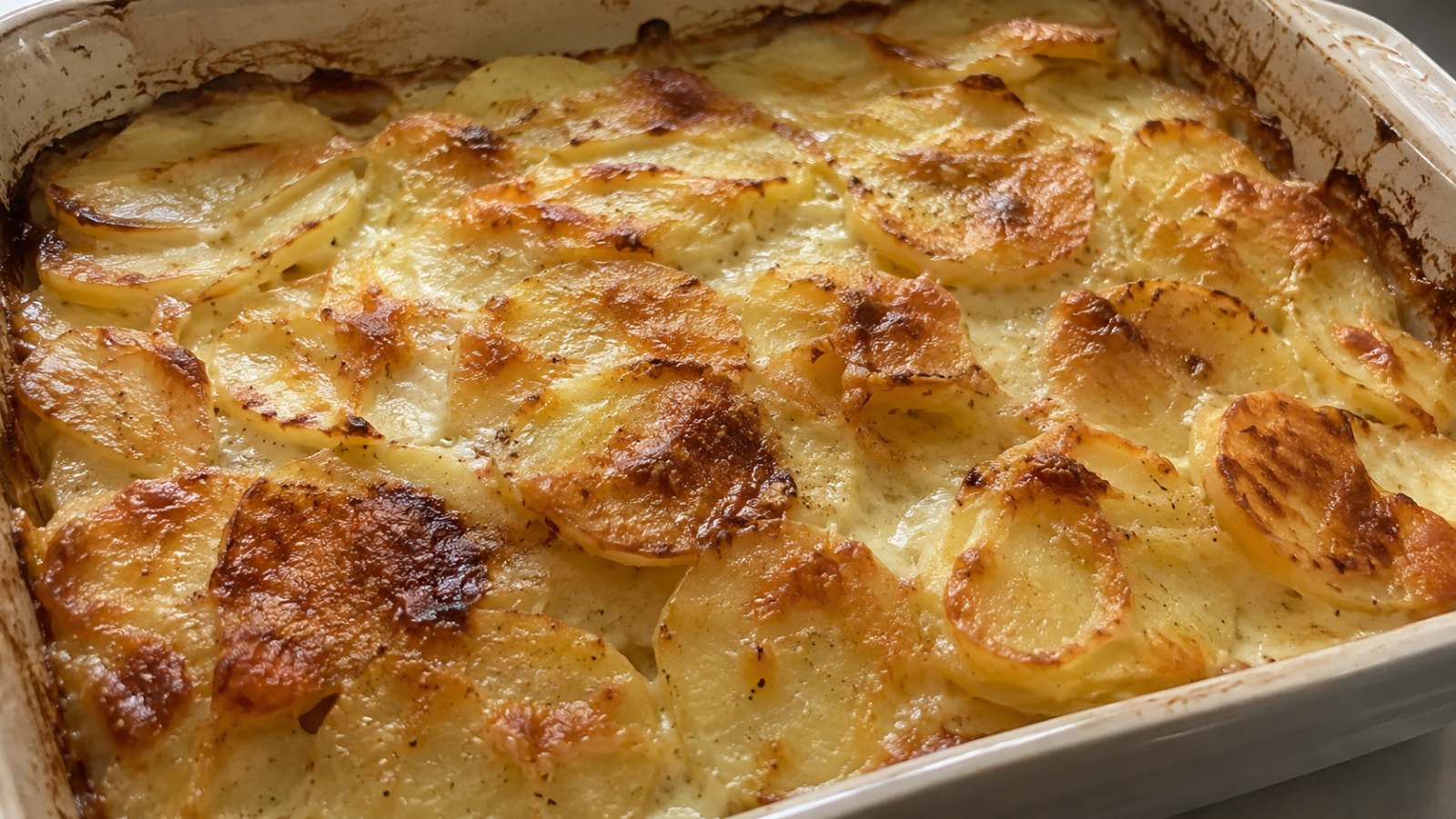
Thin potato slices baked slowly in garlic-flavoured cream become soft and silky, with a lightly golden top. For that classic French texture, try Delia Smith Dauphinoise Potatoes Recipe with its simple combination of potatoes, cream, milk and butter.
Ingredients
This recipe serves 2–3 people and takes approximately 20 minutes to prepare, followed by 1 hour and 30 minutes of baking.
450g (1 lb) potatoes: King Edward or Desirée potatoes are good choices because they become tender during slow cooking.
150ml (5 fl oz) double cream: Gives the potatoes their rich, creamy texture.
150ml (5 fl oz) whole milk: Combines with the cream to make a smooth sauce.
1 small garlic clove, crushed: Adds a gentle garlic flavour.
25g (1 oz) butter: Used for greasing the dish and adding richness.
A little freshly grated nutmeg: Adds a subtle warmth to the cream.
Salt: For seasoning the potato layers.
Freshly ground black pepper: Adds a little extra flavour.
You will also need a shallow ovenproof baking dish, approximately 21cm (8½ inches) long. A ceramic gratin dish is a good choice because it holds heat well and can go straight from the oven to the table.
How to Make Delia Smith Dauphinoise Potatoes
Step 1: Prepare the Potatoes
Preheat your oven to 150°C (300°F), Gas Mark 2. Take a little of the butter and grease the inside of your baking dish, covering the bottom and sides.
Peel the potatoes and cut them into thin slices, approximately 2mm thick. You can use a sharp knife, although a mandoline will give you more even slices.
Try not to cut them too thickly. Thin slices cook more evenly and absorb the creamy liquid as they soften.
There is no need to boil the potatoes before baking. They will cook slowly in the milk and cream.
I prefer not to rinse the potatoes after slicing because their natural starch helps thicken the sauce. If you have already rinsed them, dry the slices thoroughly with a clean kitchen towel.
Step 2: Arrange the Potatoes and Add the Cream
Place a layer of potato slices across the bottom of the buttered dish. Allow the slices to overlap slightly so there are no large gaps.
Sprinkle with a little salt, freshly ground black pepper and some of the crushed garlic.
Add another layer of potatoes and continue seasoning between the layers until you have used all the slices. Spread the remaining garlic evenly through the dish.
Pour the double cream and whole milk into a jug and stir them together. Slowly pour the mixture over the potatoes, allowing the liquid to run between the layers.
The potatoes should sit in the creamy liquid, although the upper surface does not need to be completely submerged.
Sprinkle a little freshly grated nutmeg over the top. Cut the remaining butter into small pieces and scatter them across the potatoes.
Avoid adding too much nutmeg. A small amount gives the cream a pleasant flavour without overpowering the garlic and potatoes.
Step 3: Bake Until Soft and Golden
Place the dish on the upper shelf of your preheated oven and bake for approximately 1 hour and 30 minutes.
As the potatoes cook, they absorb some of the cream and milk. The remaining liquid gradually thickens around the layers.
After 90 minutes, insert a knife into the centre of the dish. The potatoes should feel completely tender, with no firm pieces remaining.
If the knife meets resistance, return the dish to the oven for another 10–15 minutes.
The surface should have a light golden colour, while the potatoes underneath remain moist and creamy.
Remove the dish from the oven and leave it to rest for about 10 minutes before serving. This gives the cream time to settle and makes the potatoes easier to serve without breaking the layers apart.
What I like about Delia Smith Dauphinoise Potatoes Recipe is the gentle cooking method. The potatoes become tender without losing their shape, and the cream develops a pleasant garlic flavour without needing cheese.
What to Serve With Delia Smith Dauphinoise Potatoes
Dauphinoise potatoes are quite rich, so they taste especially good with roasted meat or vegetables that provide a lighter contrast.
Roast beef is one of the most traditional pairings. The creamy potatoes go particularly well with sliced beef, gravy and roasted carrots.
Roast chicken is another good option. Chicken seasoned with thyme, garlic or lemon complements the cream without making the meal feel too heavy.
Roast lamb also tastes excellent alongside dauphinoise potatoes, especially with rosemary and a little gravy.
For a simpler dinner, serve the potatoes with steamed broccoli, green beans or sautéed spinach. A fresh green salad with a light vinaigrette also helps balance the richness of the cream.
Personally, I think roast chicken and green beans make one of the nicest combinations because the potatoes already provide plenty of flavour.
Delia Smith Dauphinoise Potatoes Nutrition Information
The following values are approximate estimates per serving, based on dividing the finished dish into three portions.
Nutrient | Amount per serving |
|---|---|
Calories | 440 kcal |
Carbohydrates | 28g |
Protein | 6g |
Total fat | 32g |
Saturated fat | 20g |
Fibre | 3g |
Sugars | 4g |
Most of the fat comes from the double cream and butter, while the potatoes provide carbohydrates, fibre and potassium.
The exact nutritional values depend on the potatoes, dairy products and portion sizes used.
FAQs
Can I make dauphinoise potatoes ahead of time?
Yes. You can cook the potatoes a day ahead, allow them to cool and refrigerate them in a covered dish. Reheat at 160°C until piping hot throughout. Cover loosely with foil if the surface begins to brown too much.
Do I need to boil the potatoes first?
No. Dauphinoise potatoes are traditionally baked from raw. Cutting them into thin slices gives them enough time to soften while cooking in the cream and milk.
Why are my dauphinoise potatoes watery?
Too much liquid, wet potato slices or insufficient cooking can leave the sauce thin. Measure the milk and cream carefully, and allow the potatoes to cook until tender. Resting the dish for 10 minutes also helps the sauce settle.
Can I add cheese to dauphinoise potatoes?
Yes, but traditional dauphinoise doesn’t require cheese. The cream and butter already give the dish a rich flavour. If you prefer a cheesy version, a little Gruyère can be sprinkled over the top before baking.
Which potatoes are best for dauphinoise?
King Edward and Desirée potatoes are both good choices. Their texture becomes soft during baking, while the slices retain enough shape to form visible layers.
Can I freeze dauphinoise potatoes?
Yes, although freezing may change the texture of the cream sauce. Allow the cooked potatoes to cool completely, place them in an airtight container and freeze for up to one month. Thaw overnight in the refrigerator before reheating thoroughly in the oven.