

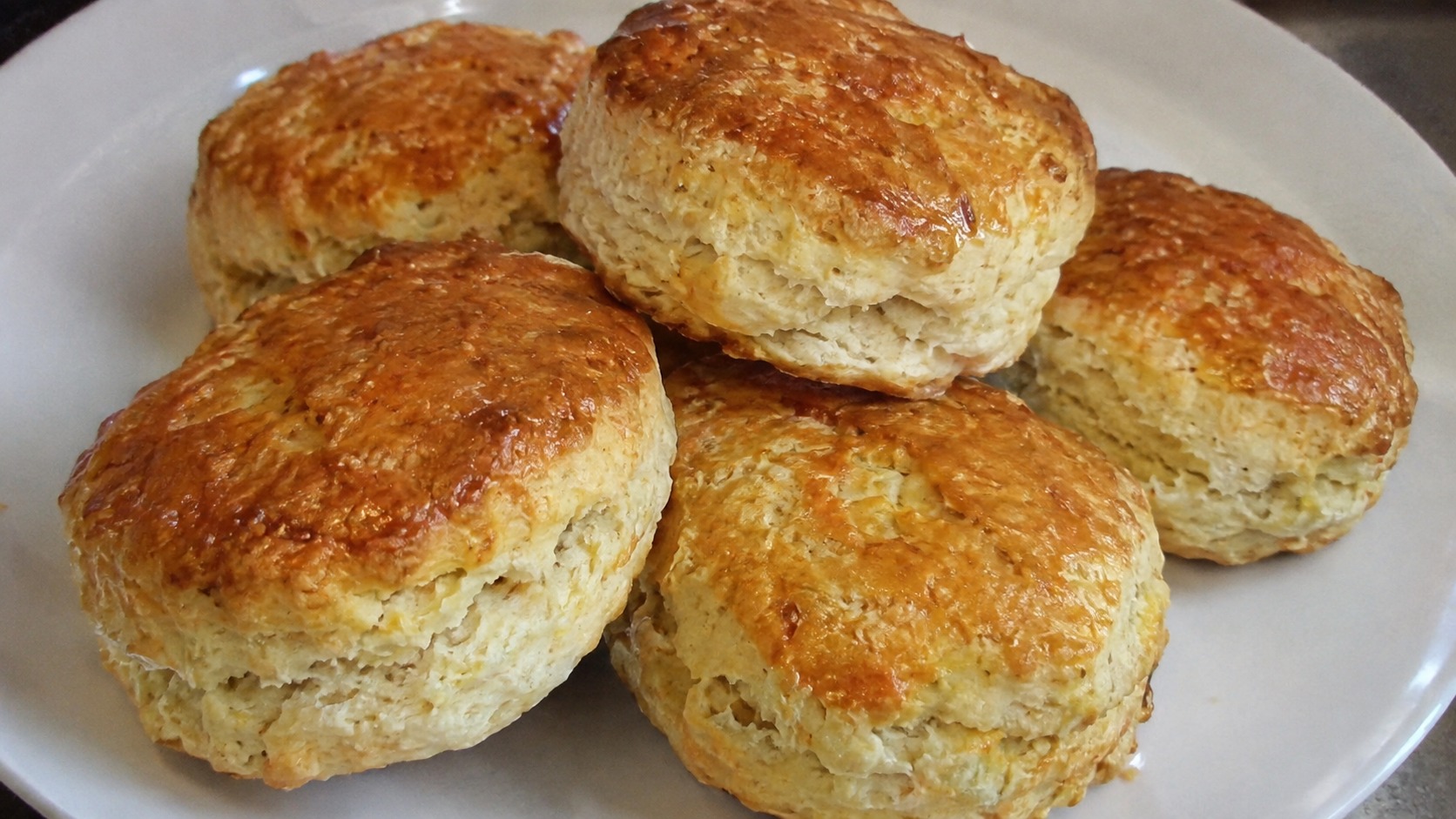
Delia Smith Buttermilk Scones Recipe uses a simple mixture of self-raising flour, butter, sugar, egg and buttermilk. The dough should be soft without becoming sticky, and the less you work it, the lighter the finished scones will be.
Ingredients
- 225g self-raising flour, plus extra for dusting
- 75g butter, at room temperature
- 40g golden caster sugar
- 1 large egg, beaten
- 2–3 tablespoons buttermilk, plus a little extra for brushing
- A pinch of salt
How to Make Delia Smith Buttermilk Scones
Step 1
Preheat the oven to 220°C (425°F/Gas Mark 7). Lightly grease a baking tray.
Sift the self-raising flour and salt into a large mixing bowl. Add the butter and rub it into the flour using your fingertips until the mixture looks like fine breadcrumbs.
Step 2
Beat the egg with 2 tablespoons of buttermilk in a small jug. Pour this gradually into the flour mixture and begin mixing with a palette knife or blunt dinner knife.
As the dough starts to come together, use your hands to finish bringing it together. It should feel soft but not sticky. If it looks dry or refuses to form a dough, add the remaining buttermilk a teaspoon at a time.
Turn the dough onto a lightly floured surface and gently shape it into a round about 2.5cm (1 inch) thick. Avoid heavy kneading.
Step 3
Use a round cutter to cut out the scones. Press the cutter straight down, then lift it cleanly. Gather the remaining dough gently and cut another scone if possible.
Place the scones on the prepared baking tray. Brush the tops lightly with buttermilk and dust with a little flour.
Bake on the top shelf of the oven for 10–12 minutes, until the scones are well risen and golden brown. Transfer them to a wire rack and serve while they are still fresh and warm.
The biggest mistake is working the dough too much. Once the flour, butter and liquid have formed a soft dough, stop handling it. A heavy hand produces a tighter, less tender scone.
What to Serve With Delia Smith Buttermilk Scones
Serve these scones warm, split through the middle and spread generously with butter. For a traditional sweet serving, add strawberry, raspberry or blackcurrant jam and clotted cream.
A pot of strong tea works naturally alongside them. They are also good with homemade preserves, particularly sharper fruit jams that balance the mild sweetness of the scone.
For the best texture, eat them on the day they are baked.
Delia Smith Buttermilk Scones Nutrition Information
Approximate nutrition per scone will depend on the size of the scones and the exact amount of buttermilk used.
- Calories: approximately 190–220 kcal
- Carbohydrates: approximately 28–32g
- Protein: approximately 5g
- Fat: approximately 8–10g
- Sugar: approximately 7–9g
FAQs
Can I use more buttermilk?
Only add more if the dough is too dry. Add it a teaspoon at a time. Too much liquid will make the dough sticky and harder to shape.
Why did my scones turn out heavy?
The usual culprit is overworking the dough. Once the ingredients have come together, handle the dough as little as possible. Also make sure your self-raising flour is fresh and your oven has reached the correct temperature.
Why shouldn’t I twist the cutter?
Twisting can compress the edges of the dough. Press the cutter straight down and lift it back up to give the scones a better chance of rising evenly.
Can I prepare the dough ahead of time?
These scones are at their best freshly baked. If you have leftovers, they can be frozen and reheated, but the freshly baked texture is noticeably better.
How thick should the dough be?
Aim for about 2.5cm (1 inch) thick before cutting. A thin sheet of dough will give you flatter scones, soft result you want.
How many scones does this recipe make?
The mixture makes approximately six scones, depending on the size of your cutter.