

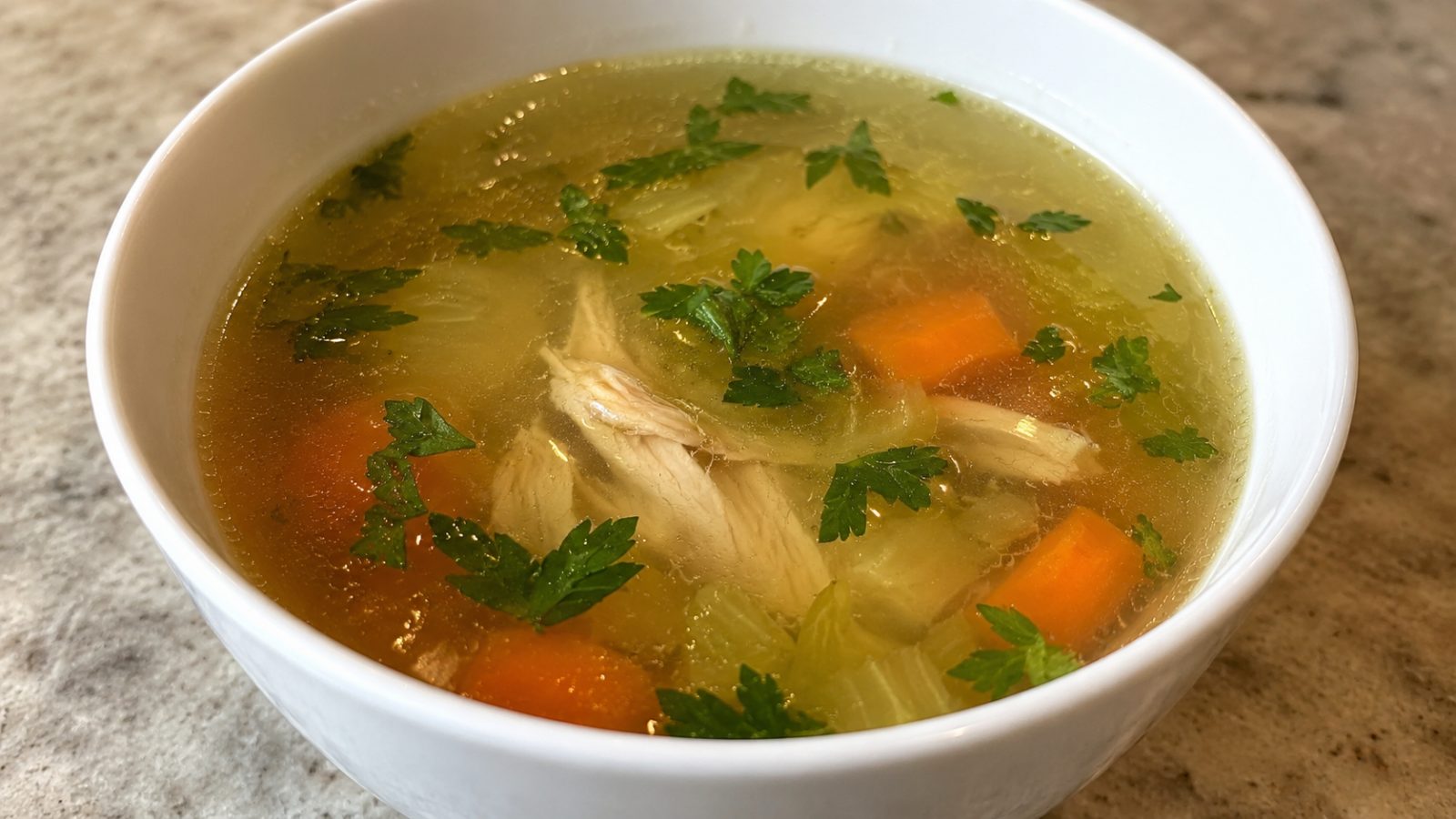
Chicken stock is a savoury liquid made by simmering chicken bones, vegetables and herbs in water. For a traditional homemade version, Delia Smith Chicken Stock Recipe uses simple ingredients to produce a light, flavourful broth for soups, gravies and sauces.
Ingredients
This recipe makes approximately 1 litre of chicken stock, enough for several small dishes or one large pot of soup.
1 set of chicken giblets, excluding the liver, or 2–3 chicken wings
1 celery stick, cut in half lengthways
2 small carrots, washed and halved
2 small onions, peeled and thinly sliced
2 bay leaves
12 whole black peppercorns
1 small bunch of fresh parsley stalks
A few fresh celery leaves
A small pinch of salt
1.2 litres cold water
Preparation time: 10 minutes Cooking time: Approximately 1 hour Yield: Approximately 1 litre
Chicken wings are a good alternative to giblets because the bones and skin give the stock a fuller texture. I prefer using wings when making stock for gravy, as they release gelatine during cooking.
The vegetables should be fresh, but they don’t need careful chopping. Everything will be strained out at the end, so cutting the carrots and celery into large pieces is fine.
How to Make Delia Smith Chicken Stock
Step 1
Place the chicken giblets or wings in a large saucepan. If you’re using giblets, check that the liver has been removed because it can give the stock a strong, slightly bitter taste.
Add the sliced onions, carrots, celery, bay leaves, black peppercorns, parsley stalks and celery leaves. Pour in 1.2 litres of cold water, making sure the chicken pieces are covered.
Put the saucepan over medium heat and bring the water slowly towards boiling point.
As the water heats, a layer of greyish foam may appear on the surface. Remove it with a spoon. This foam comes from proteins released by the chicken, and skimming it helps produce a clearer stock.
Step 2
Once the water begins boiling, lower the heat immediately. The stock should simmer gently, with just a few small bubbles appearing at the surface.
Cover the saucepan with a lid, leaving a small gap for steam to escape. Cook for approximately 1 hour.
Check occasionally to make sure the liquid isn’t boiling too strongly. A vigorous boil can make the stock cloudy and cause more water to evaporate than necessary.
During this time, the chicken will release its savoury flavour while the vegetables and herbs add sweetness and aroma.
There’s no need to stir the stock regularly. Just leave it to simmer and skim off any additional foam.
After an hour, the liquid should have a pale golden colour and a pleasant chicken smell. Taste a little to check the flavour, remembering that homemade stock usually contains much less salt than commercial versions.
Step 3
Remove the saucepan from the heat and leave it for a few minutes.
Place a fine-mesh sieve over a large heatproof bowl or jug. Carefully pour the stock through the sieve, separating the liquid from the chicken, vegetables and herbs.
Cool the stock quickly by placing the container in cold or iced water. Once cooled, refrigerate it.
After chilling, you may notice a layer of fat on the surface. Remove it with a spoon if you prefer a lighter stock.
The finished stock should be gently savoury, without any single herb or vegetable overpowering the chicken flavour.
What to Serve With Delia Smith Chicken Stock
Chicken stock is normally used as a cooking ingredient, although you can also drink it warm as a simple broth.
Chicken soup: Add cooked shredded chicken, carrots, celery and small pasta or noodles. Homemade stock gives the soup a fresh chicken flavour without needing much extra seasoning.
Roast chicken gravy: Combine the stock with roasting juices and a little flour. Simmer until the gravy thickens, then season with salt and pepper.
Risotto: Warm the stock separately and add it gradually to risotto rice. The chicken flavour works particularly well with mushrooms, peas and Parmesan cheese.
Vegetable soup: Use the stock to cook potatoes, leeks, carrots or other vegetables. The broth gives the soup a savoury taste while allowing the vegetables to remain the main flavour.
I find Delia Smith Chicken Stock Recipe especially useful for making gravy and chicken soup. Homemade stock has a cleaner taste than most stock cubes, and you can control exactly how much salt goes into the finished meal.
Delia Smith Chicken Stock Nutrition Information
Chicken stock is generally low in calories, especially after the fat has been removed.
The following values are approximate estimates for one 250 ml serving of strained stock.
Nutrient | Approximate Amount |
|---|---|
Calories | 20–40 kcal |
Protein | 2–4 g |
Total Fat | 0.5–2 g |
Carbohydrates | 0–2 g |
Fibre | 0 g |
Sugar | Less than 1 g |
Sodium | Depends on added salt |
The nutritional content changes according to the chicken pieces used, the amount of water remaining and how much fat is removed after chilling.
Stock prepared with chicken wings may contain more natural gelatine, which can make it slightly thicker when refrigerated.
FAQs
Can I Make Chicken Stock With Leftover Roast Chicken?
Yes. Leftover roast chicken bones make very good stock. Place the carcass in a saucepan with the vegetables and herbs, cover with cold water and simmer gently for 2–3 hours. The finished stock will usually have a darker colour and a stronger roasted chicken flavour.
How Long Does Homemade Chicken Stock Last?
Homemade chicken stock can be stored in an airtight container in the refrigerator for 3–4 days at 4°C or below. Make sure it cools quickly before refrigerating. For longer storage, freeze it for up to 3 months for the best quality.
Why Does My Chicken Stock Turn Into Jelly?
Chicken bones and connective tissue release collagen during cooking. This changes into gelatine, which can cause the stock to set when cold. It’s completely normal and usually indicates that the stock contains a good amount of natural gelatine. Heating it will turn it back into liquid.
Should I Add Salt to Chicken Stock?
Only a little salt is needed during cooking. Stock is often added to soups, gravies and sauces that require further seasoning. Keeping the salt low gives you more control over the final dish, particularly if the stock will be reduced.
Can I Make Chicken Stock Without Celery?
Yes. Leave out the celery and use a little extra carrot, onion or parsley instead. The flavour will change slightly, but you’ll still get a good chicken stock.
Why Is My Chicken Stock Cloudy?
Chicken stock usually becomes cloudy when it boils too strongly or is stirred frequently. Keep the heat low and remove the foam that appears during cooking. A cloudy stock can still taste good, so there’s no need to discard it simply because it isn’t clear.