

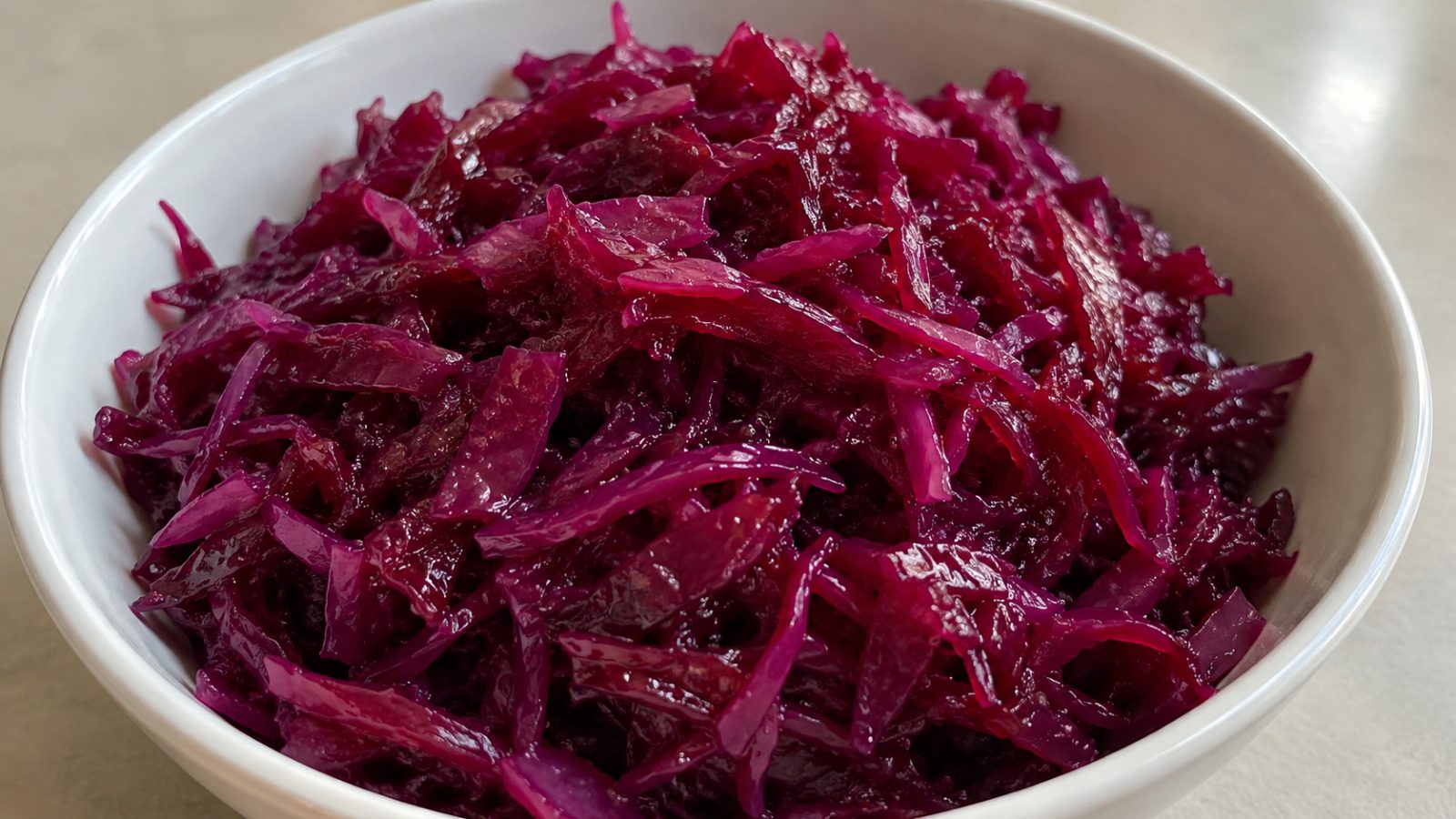
Pickling preserves vegetables in an acidic liquid, giving red cabbage its familiar sharp flavour and crunchy texture. For that traditional British-style finish, Delia Smith Pickled Red Cabbage Recipe uses salted cabbage and vinegar infused with warm spices.
Ingredients
This recipe makes approximately 2 medium jars, depending on the size of the cabbage.
1 medium red cabbage (about 900g): Choose a firm cabbage with fresh, tightly packed leaves.
2 tablespoons sea salt: Helps remove excess moisture and keeps the cabbage crunchy.
600ml malt vinegar (5% acidity): Gives the pickle its traditional sharp flavour.
75g caster sugar: Balances the acidity without making the cabbage too sweet.
1 teaspoon black peppercorns: Adds a gentle peppery taste.
4 whole cloves: Give the vinegar a warm, slightly sweet aroma.
1 teaspoon mustard seeds: Add a mild, savoury flavour.
2 bay leaves: Bring a subtle herbal taste to the pickling liquid.
Preparation time: 20 minutes Salting time: 12–24 hours Pickling time: 3–5 days Storage: Up to 3 weeks in the refrigerator
How to Make Delia Smith Pickled Red Cabbage
Step 1: Slice and Salt the Cabbage
Remove the outer leaves from the red cabbage, cut it into quarters, and take out the hard central core. Slice the cabbage into thin strips using a sharp knife or mandoline. Thin, even slices are easier to pack into jars and absorb the vinegar more evenly.
Put the sliced cabbage in a large glass or stainless steel bowl. Sprinkle the sea salt over it and mix thoroughly with clean hands, making sure the salt reaches all the cabbage.
Cover the bowl and leave it for 12–24 hours in a cool place, or in the refrigerator if your kitchen is warm. The salt will draw water from the cabbage, leaving it slightly softer but still firm.
After salting, transfer the cabbage to a colander and rinse thoroughly under cold running water. Drain well, then spread it over a clean kitchen towel and pat dry.
I prefer leaving the cabbage to drain for another 15 minutes before packing it. Excess water can dilute the vinegar and leave the finished pickle tasting weaker than expected.
Step 2: Make the Spiced Vinegar
Pour the malt vinegar into a medium saucepan. Add the caster sugar, black peppercorns, cloves, mustard seeds, and bay leaves.
Place the saucepan over medium heat and stir gently until the sugar dissolves. Bring the vinegar to a light simmer, then reduce the heat and let it cook for approximately 5 minutes.
The vinegar should develop a warm, spiced aroma without losing its sharp character. Avoid boiling it aggressively, as some of the liquid will evaporate.
Remove the saucepan from the heat and allow the mixture to cool completely.
You can strain out the whole spices before using the vinegar or leave a few peppercorns and mustard seeds in the jars. Personally, I prefer straining out the cloves and bay leaves because their flavour can become quite strong over time.
Taste the cooled vinegar using a clean spoon. It should be noticeably sharp with a little sweetness and gentle spice.
Step 3: Fill the Jars and Pickle the Cabbage
Wash two glass jars and their vinegar-resistant lids thoroughly with hot, soapy water. Rinse and allow them to dry completely.
Pack the salted cabbage into the jars, pressing it down gently so there are no large empty spaces. Leave approximately 2cm of space at the top.
Pour the cooled spiced vinegar over the cabbage until all the strips are submerged. Tap the jars lightly against the counter to release trapped air bubbles.
Close the lids tightly and place the jars in the refrigerator immediately. Leave them for at least 3 days before opening.
After 5 days, the cabbage should have absorbed more of the vinegar and developed a stronger pickled flavour.
For Delia Smith Pickled Red Cabbage Recipe, I would avoid heating the cabbage itself. Keeping it raw gives the finished pickle the firm, crunchy texture that makes it so good alongside roast meats and cheese.
Keep the jars refrigerated, as this method does not produce a shelf-stable preserve.
What to Serve With Delia Smith Pickled Red Cabbage
Pickled red cabbage goes particularly well with rich, savoury foods because its acidity cuts through fat and adds a refreshing crunch.
Roast pork: Serve a spoonful alongside roast pork, crispy crackling, and potatoes. The vinegar balances the richness of the meat.
Cold ham: A traditional combination, especially with crusty bread, mustard, and mature cheese.
Sausages and mashed potatoes: The sharp cabbage adds contrast to buttery mashed potatoes and juicy pork sausages.
Cheese sandwiches: Try it with mature Cheddar and fresh bread. I think stronger cheeses taste particularly good with pickled vegetables.
Ploughman’s lunch: Add it to a plate of cheese, bread, cold meat, and other pickles.
Roast beef: A little pickled cabbage brings acidity and crunch to slices of cold or warm roast beef.
Delia Smith Pickled Red Cabbage Nutrition Information
The following figures are approximate values per 50g serving. Nutrition varies according to the amount of sugar, salt, and vinegar absorbed by the cabbage.
Nutrient | Approximate Amount |
|---|---|
Calories | 25–40 kcal |
Carbohydrates | 6–9g |
Protein | 0.5g |
Fat | 0.1g |
Fibre | 1g |
Sugar | 4–7g |
Sodium | Varies with salting and rinsing |
Red cabbage contains fibre, vitamin C, vitamin K, and natural pigments called anthocyanins, which give it its purple-red colour.
FAQs
Why Do You Salt Red Cabbage Before Pickling?
Salt draws excess water out of the cabbage and helps preserve its crunchy texture. It also prevents too much water from diluting the pickling vinegar. Rinse the cabbage thoroughly after salting to remove excess salt.
How Long Does Pickled Red Cabbage Take to Be Ready?
Allow at least 3 days in the refrigerator before eating it. After approximately 5 days, the cabbage develops a more balanced vinegar flavour. Thinly sliced cabbage usually absorbs the pickling liquid faster than thicker pieces.
Can I Use White Vinegar Instead of Malt Vinegar?
Yes. White vinegar with 5% acidity produces a sharper, cleaner taste. Malt vinegar gives the cabbage a deeper, more traditional British pickle flavour. Apple cider vinegar with 5% acidity is another good alternative.
How Long Does Homemade Pickled Red Cabbage Last?
Store it in tightly closed jars in the refrigerator for up to 3 weeks. Keep the cabbage submerged beneath the vinegar and always use a clean spoon. Discard it if you notice mould, an unusual smell, or unexpected bubbling.
Can I Make Pickled Red Cabbage Without Sugar?
Yes. You can leave out the sugar entirely, although the vinegar will taste noticeably sharper. Sugar is mainly included to balance the acidity and soften the stronger flavour of malt vinegar.
Why Is My Pickled Red Cabbage Soft Instead of Crunchy?
Soft cabbage can result from slicing it too thinly, pouring hot vinegar over it, or keeping it too long. Allow the vinegar to cool completely before filling the jars, and avoid pressing the cabbage too firmly while packing.