

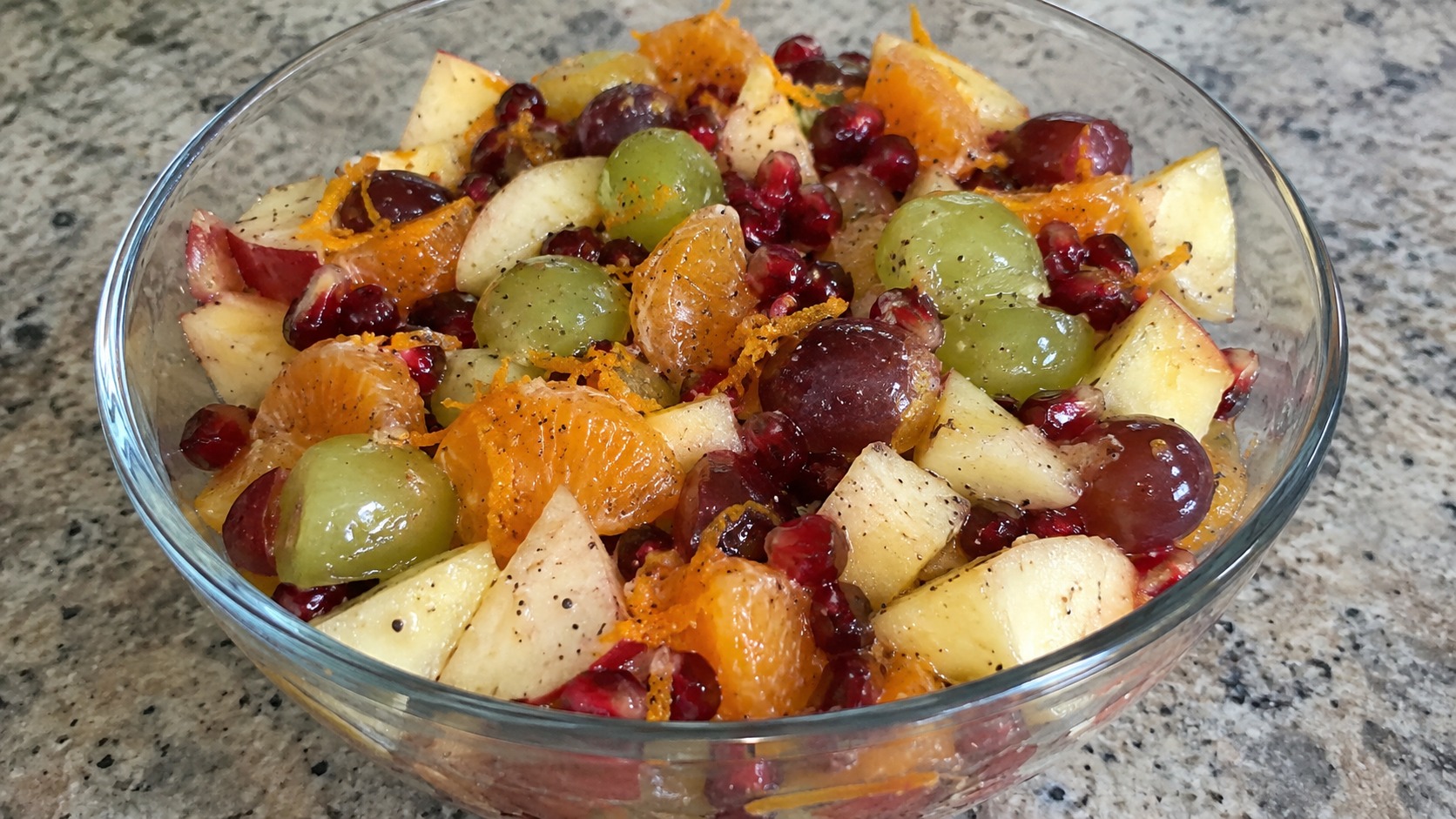
Winter fruit salad uses dried fruits soaked in water and gently cooked until soft, unlike fresh fruit salads made with raw fruit. With its rich fruit syrup and fresh orange flavour, Delia Smith Winter Fruit Salad Recipe combines prunes, apricots, figs and raisins, served with natural yoghurt and toasted hazelnuts.
Ingredients
This recipe serves 4–6 people. Preparation takes about 10 minutes, followed by overnight soaking, 10 minutes of cooking and time to chill.
For the fruit salad:
110g (4 oz) dried prunes, preferably pitted
110g (4 oz) dried apricots
110g (4 oz) dried figs
110g (4 oz) large raisins
725ml (1¼ pints) cold water
Finely grated zest and juice of 1 orange
For serving:
425ml (15 fl oz) natural yoghurt
50g (2 oz) hazelnuts, toasted and chopped
Choose dried fruits that are soft and naturally sweet. Avoid varieties coated in extra sugar because the fruit already produces a sweet syrup during soaking and cooking.
I recommend using whole dried fruits instead of chopping them into small pieces. They hold their shape during cooking and give the finished salad a nicer appearance.
How to Make Delia Smith Winter Fruit Salad
Step 1: Soak the Dried Fruits
Place the prunes, apricots, figs and raisins in a large mixing bowl. Check the figs for any tough stalks and remove them before adding the water.
Pour 725ml of cold water over the fruits, making sure they are completely submerged. Cover the bowl and leave it in the refrigerator overnight.
The fruits gradually absorb the water, becoming softer and plumper. Some of their natural sugars also dissolve into the soaking liquid, which later becomes the syrup for the salad.
Don’t throw away this liquid. It contains plenty of fruit flavour and will be used during cooking.
Step 2: Gently Cook the Fruit
The next day, transfer the soaked fruits and their liquid into a medium saucepan. Place it over medium heat and bring the liquid to a gentle simmer.
Reduce the heat to low, cover the saucepan and cook for approximately 10 minutes. The fruits should become tender without breaking apart.
Check a fig or prune with a fork. If the centre still feels firm, continue cooking for another few minutes.
Avoid boiling the mixture vigorously. The dried fruits have already softened during soaking, so they only need gentle heating to finish cooking.
As the fruits simmer, the liquid develops a light syrupy consistency. There’s no need to add sugar because the dried fruits provide enough natural sweetness.
Step 3: Add the Orange and Chill
Remove the saucepan from the heat once the fruits are tender. Finely grate the orange zest, taking care not to include the bitter white pith.
Squeeze the orange juice into the warm fruit mixture, add the zest and stir carefully. The orange gives the syrup a fresher taste and balances the concentrated sweetness of the dried fruits.
Transfer the salad to a serving bowl and allow it to cool. Cover and refrigerate until chilled.
Meanwhile, toast the hazelnuts in a dry frying pan over medium-low heat for a few minutes, stirring regularly until fragrant. Leave them to cool before chopping.
Serve the chilled fruit in individual bowls with some syrup, a spoonful of natural yoghurt and a scattering of toasted hazelnuts.
What to Serve With Delia Smith Winter Fruit Salad
Natural yoghurt is the classic accompaniment for this fruit salad. Its slightly tangy flavour balances the sweet syrup, while its creamy texture goes nicely with the tender fruit.
Greek yoghurt is another good choice if you prefer something thicker. Unsweetened varieties are best because the prunes, figs and raisins already make the dessert quite sweet.
Toasted hazelnuts add a crunchy texture that contrasts with the soft fruit. I prefer adding them just before serving so they stay crisp instead of absorbing moisture from the syrup.
Warm porridge also goes well with the fruit mixture. Spoon a little fruit and syrup over cooked oats for a simple winter breakfast. The orange-flavoured syrup gives the porridge sweetness without needing additional sugar.
For dessert, I would stick with plain yoghurt and hazelnuts. The fruit has enough flavour on its own, and too many extras can hide the taste of the orange.
Delia Smith Winter Fruit Salad Nutrition Information
The following nutritional values are estimates per serving when the recipe is divided into six portions, including yoghurt and hazelnuts.
Nutrient | Approximate amount |
|---|---|
Calories | 295 kcal |
Carbohydrates | 56g |
Protein | 6g |
Fat | 9g |
Saturated fat | 2g |
Fibre | 6g |
Sugars | 43g |
Sodium | 35mg |
Dried fruits provide dietary fibre and naturally occurring sugars. Hazelnuts add unsaturated fats, while natural yoghurt contributes protein and calcium.
Although Delia Smith Winter Fruit Salad Recipe contains no added sugar, dried fruits are naturally high in sugar, so the finished dessert is quite sweet. The nutritional values will vary according to the dried fruit and yoghurt used.
FAQs
Can I Make Delia Smith Winter Fruit Salad Ahead of Time?
Yes. You can prepare the salad a day before serving and keep it covered in the refrigerator. Chilling also gives the orange flavour time to blend with the fruit syrup. Keep the yoghurt and hazelnuts separate until serving.
Can I Use Fresh Fruit Instead of Dried Fruit?
Fresh fruits such as apples, pears and oranges can be used in winter fruit salads, but they won’t give the same result in this recipe. Dried fruits absorb the soaking water and release concentrated sweetness during cooking. Fresh fruit would need different preparation and cooking times.
Do I Need to Add Sugar?
No. Prunes, apricots, figs and raisins contain plenty of natural sugars. After overnight soaking and gentle simmering, the liquid becomes sweet enough without adding honey or sugar.
How Long Does Winter Fruit Salad Last in the Fridge?
The cooked fruit salad can be stored in an airtight container in the refrigerator for up to three days. Keep it chilled and use a clean spoon each time you serve it. Store the yoghurt and toasted hazelnuts separately.
Can I Serve Winter Fruit Salad Warm?
Yes. Although the recipe is normally served chilled, the cooked fruits also taste good warm. Let the mixture cool slightly after cooking, then serve with cold natural yoghurt. The contrast between the warm syrup and cold yoghurt is particularly nice during winter.
Can I Skip the Overnight Soaking?
You can shorten the soaking time, but the fruits may need longer cooking to become tender. Overnight soaking gives the figs, prunes and apricots enough time to soften evenly. For the intended texture, I recommend keeping this step rather than rushing the preparation.