

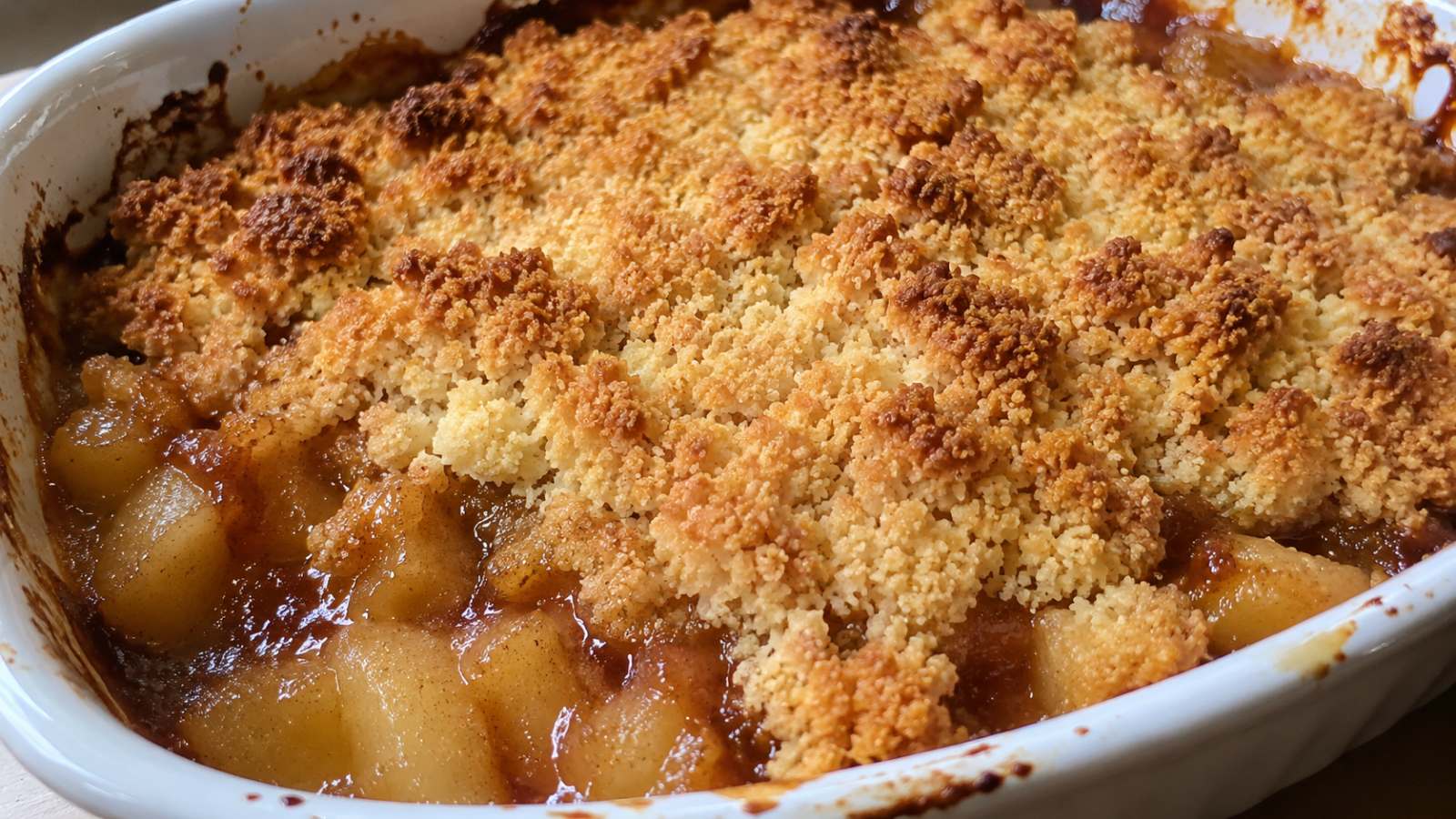
Crumble topping is a mixture of flour, butter, and sugar that bakes into a golden, crunchy layer over cooked fruit. For a classic British dessert, Delia Smith Crumble Topping Recipe uses simple ingredients to give the topping its familiar buttery taste and crumbly texture.
Ingredients
This recipe makes enough topping for 6 servings, covering a medium-sized baking dish.
- 175g (6 oz) plain flour: Gives the crumble its light, crumbly texture.
- 75g (3 oz) cold unsalted butter: Cut into small cubes so it mixes easily with the flour.
- 75g (3 oz) demerara sugar: Adds sweetness and a slightly crunchy finish.
- A pinch of salt: Balances the sweetness.
- ½ teaspoon ground cinnamon (optional): Particularly good with apple or pear crumble.
Preparation Time: 10 minutes
Cooking Time: 30–40 minutes
Servings: 6
Oven Temperature: 190°C (170°C fan), Gas Mark 5
How to Make Delia Smith Crumble Topping
Step 1: Rub the Butter Into the Flour
Place the plain flour in a large mixing bowl. Add the cold butter cubes and gently rub them into the flour using your fingertips.
Continue until the mixture resembles coarse breadcrumbs. You should still see a few small pieces of butter, which help create a crisp, uneven surface during baking.
Avoid squeezing everything together into a dough. The mixture should feel loose and slightly sandy.
I prefer using my fingertips instead of a food processor because it gives me better control over the texture. It also takes only a few minutes, especially if the butter is properly chilled.
Step 2: Mix in the Sugar
Add the demerara sugar and a small pinch of salt to the flour mixture. Stir gently with a spoon until the sugar is evenly distributed.
If you’re making apple or pear crumble, add the cinnamon at this stage. It gives the topping a mild, warm flavour without overpowering the fruit.
Demerara sugar is a good choice because its larger crystals provide extra crunch. Granulated sugar also works, although the topping will have a finer texture.
For Delia Smith Crumble Topping Recipe, I would stick with demerara sugar if you enjoy the traditional crunchy finish.
Once everything is combined, the mixture should look like uneven breadcrumbs with a few slightly larger crumbs. Keep it in the refrigerator if you’re not using it immediately.
Step 3: Cover the Fruit and Bake
Preheat your oven to 190°C (170°C fan), Gas Mark 5.
Prepare around 700–800g of your chosen fruit and arrange it in a medium ovenproof dish. Apples, pears, plums, rhubarb, and berries are all suitable choices.
Add a little sugar to the fruit if necessary, depending on how sweet or sharp it tastes. Very juicy fruit can also be mixed with a small amount of cornflour to help thicken the juices.
Scatter the crumble mixture evenly over the fruit, covering the surface without pressing it down.
Bake for 30–40 minutes until the topping turns golden brown and the fruit begins bubbling around the edges.
Remove the dish from the oven and leave it for about 10 minutes before serving. The fruit will still be hot, and the topping will become a little firmer as it cools.
What to Serve With Delia Smith Crumble Topping
Warm fruit crumble is traditionally served with custard, cream, or ice cream. Each accompaniment gives the dessert a slightly different taste and texture.
Vanilla custard is my first choice, particularly with apple or rhubarb crumble. The smooth, warm custard goes beautifully with the crunchy topping and soft fruit underneath.
Vanilla ice cream is another popular option. It slowly melts over the warm crumble, making a lovely contrast between the cold ice cream and hot filling.
Double cream is good if you prefer something less sweet. Pour a little cold cream over each serving, or whip it lightly for a thicker consistency.
Greek yoghurt also works well, especially with berry crumble. Its slightly tangy flavour balances the sweetness of the topping.
You can even bake the topping separately on a baking tray and sprinkle the cooled crumbs over stewed fruit or yoghurt.
Delia Smith Crumble Topping Nutrition Information
The following values are approximate and based on six servings of crumble topping without fruit or additional accompaniments.
| Nutrient | Amount Per Serving |
|---|---|
| Calories | 245 kcal |
| Carbohydrates | 35g |
| Protein | 3g |
| Total Fat | 10g |
| Saturated Fat | 6g |
| Sugar | 13g |
| Fibre | 1g |
Adding fruit, custard, cream, or ice cream will change the final nutritional values. The figures may also vary slightly depending on the ingredients used.
FAQs
1. What is the secret to a good crumble topping?
Cold butter and a loose breadcrumb texture produce the best results. Rub the butter gently into the flour and avoid overworking the mixture. A few larger crumbs are fine because they become crisp and golden during baking.
2. Why is my crumble topping not crunchy?
Excess moisture from the fruit can soften the topping, especially if the fruit releases plenty of juice. Avoid pressing the crumbs down, use a little cornflour with very juicy fillings, and bake until the surface is golden.
3. Can I make crumble topping ahead of time?
Yes. Store the uncooked mixture in an airtight container in the refrigerator for up to two days. You can also freeze it for around two months. There’s no need to thaw frozen topping before baking, although it may require a little extra oven time.
4. Can I use self-raising flour instead of plain flour?
Yes, but the texture will be slightly different. Self-raising flour makes a lighter, more cake-like topping. Plain flour is better for the traditional sandy, crumbly finish.
5. Can I make crumble topping without butter?
Yes. You can replace butter with a suitable baking margarine or firm plant-based baking fat. Choose one intended for baking rather than a soft, low-fat spread, as excess water can affect the texture.
6. How do I stop crumble topping from becoming too dry?
Measure the flour and butter carefully, and don’t add extra flour while mixing. The topping should contain enough butter to form small crumbs when rubbed between your fingers. If the mixture looks excessively powdery, gently rub in a little more cold butter before adding it to the fruit.